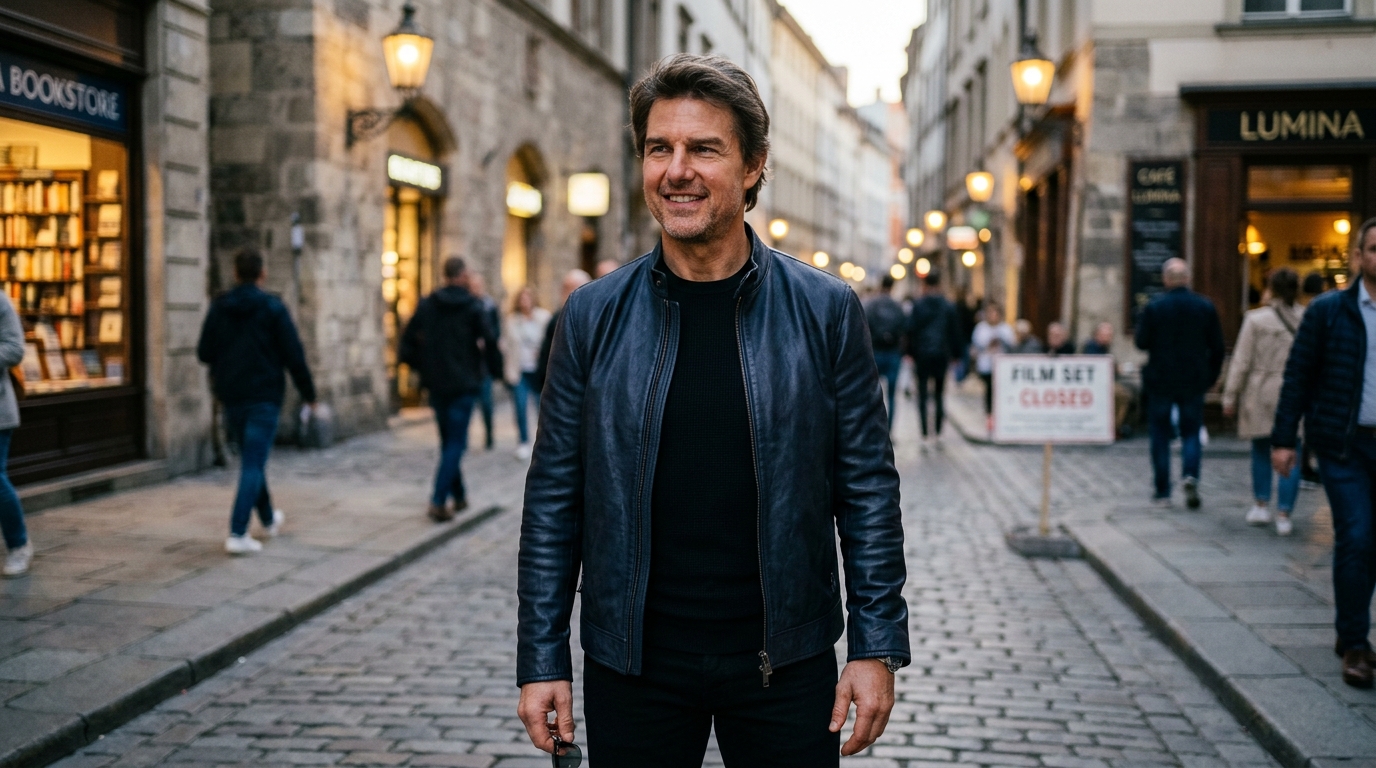
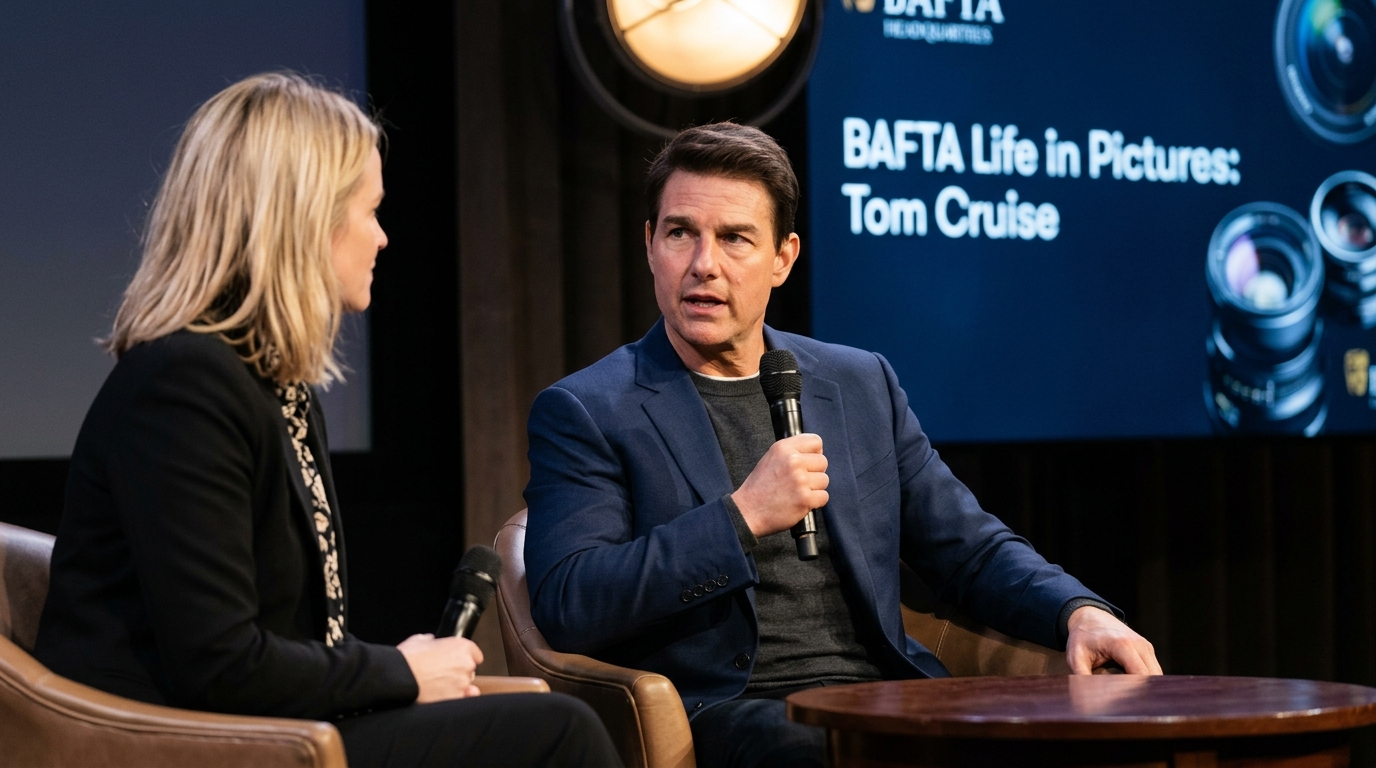
The Tom Cruise BAFTA AI speech delivered on Monday in London was not an explosive act of rebellion. It was a precise and clinical assessment of our cinematic future. Sitting at the BAFTA Piccadilly headquarters for a Life in Pictures retrospective, the veteran actor confronted the technological elephant in the room. He addressed the encroaching digital threat with quiet resolve.
Host Edith Bowman posed the inevitable question about artificial intelligence. She asked how it would disrupt the medium he loves.
Cruise responded with a six-minute monologue that immediately commanded the room. He did not yell or resort to theatrical despair over the impending doom of Hollywood. Instead, the Top Gun and Mission: Impossible star focused entirely on the irreplaceable value of human craft. He methodically unpacked the differences between cinema and streaming, before pivoting to camera lens technology.
"There is simply nothing like human," he told the silent room.
The audience erupted into spontaneous applause. It was a rare break in decorum for a notoriously low-key industry crowd. His passion struck a nerve among the assembled BAFTA members who fear the erosion of their trades.
The actor emphasized that recent theatrical successes prove audiences still crave authenticity. A blockbuster summer at movie theaters highlighted massive engagement from younger demographics. This data point reinforced his core argument. "People wanna see real things," Cruise stated. He noted that AI is inevitably coming, but it cannot synthesize the genuine human experience.
"What you put attention on, you give life," he added. He expressed a deep desire to protect craftspeople working behind the lens.
This is not his first foray into the digital debate. Cruise previously championed protections against artificial intelligence during the 2023 SAG-AFTRA negotiations. His own recent blockbusters have even tackled the subject directly. The final two Mission: Impossible films featured a rogue AI as the primary antagonist. Art and reality continue to blur for the global ambassador of movies.
The conversation eventually shifted to his next major project.
His upcoming film Digger is gearing up for a highly anticipated October 2 theatrical release. Cruise described the project as one of the most original and profoundly moving motion pictures he has ever had a hand in making.
Directed by Alejandro González Iñárritu, the film casts Cruise in a radically different mold. He plays an oil baron named Digger Rockwell. The character is charged with averting a massive environmental catastrophe that he personally caused. The script was so complex that Iñárritu read it to Cruise over two consecutive nights before the actor officially committed to the role.
The sheer absurdity of a computer generating a highly nuanced narrative is clear. Execs dreaming of a one-button movie are naive.
A machine could never replicate the specific chemistry of a director reading a script aloud for two nights. The tactile reality of filmmaking requires a human pulse. While studios may attempt to cut corners on visual effects budgets, the core architecture of a great movie relies on actual people. Cruise understands that a two-hundred-million-dollar budget means nothing without a soul.

We must heed the words of the man who continually saves cinema.
The future of Hollywood will not be written by code. It will be forged by those who refuse to let the art form become a synthetic product. As long as audiences demand the truth, the human element will remain undefeated.
The industry finds itself at a terrifying technological crossroads. Studio shareholders are increasingly seduced by the fantasy of generating flawless content for pennies on the dollar. They imagine a pristine digital ecosystem completely free of demanding actors and expensive set designers. Cruise firmly views this sterile corporate dream as a foolish endeavor destined for failure.

Movies built entirely on algorithmic prompts lack the vital friction of human collaboration. The final product will always feel cheap.
This conversation at BAFTA serves as a critical temperature check for the entire entertainment sector. A veteran star is publicly drawing a hard line in the sand. He is demanding that we protect the costume designers, the grip operators, and the lighting technicians. True cinematic magic is a physical craft that requires dirt under the fingernails and genuine emotional stakes.
Hollywood must choose between synthetic ease and difficult art.
Cruise has made his choice abundantly clear. We can only hope the executives in the boardroom were paying close attention to the spontaneous applause. The survival of the silver screen depends entirely on human stubbornness.
Frequently Asked Questions
What did Tom Cruise say about AI at the BAFTA event?
He emphasized that while artificial intelligence is an inevitable part of the industry's future, it cannot replace authentic human experiences. He noted that audiences still fundamentally want to see real things created by actual craftspeople.
Where did the Tom Cruise BAFTA Life in Pictures event take place?
The retrospective event was hosted at the BAFTA Piccadilly headquarters in London. Broadcaster Edith Bowman moderated the discussion.
What is the plot of Tom Cruise's new movie Digger?
Cruise plays an oil baron named Digger Rockwell who must avert an environmental catastrophe that he personally caused. The film is directed by Alejandro González Iñárritu.
When is the theatrical release date for the movie Digger?
The film is scheduled for a theatrical release on October 2, 2026.
Did Tom Cruise participate in the 2023 SAG-AFTRA AI negotiations?
Yes. He was a vocal advocate for establishing protections concerning the use of artificial intelligence in filmmaking during those industry strikes.
Why did Tom Cruise receive applause from the BAFTA audience?
He delivered a passionate six-minute monologue defending the value of human craft in filmmaking. The audience of industry professionals appreciated his commitment to protecting their livelihoods from digital automation.