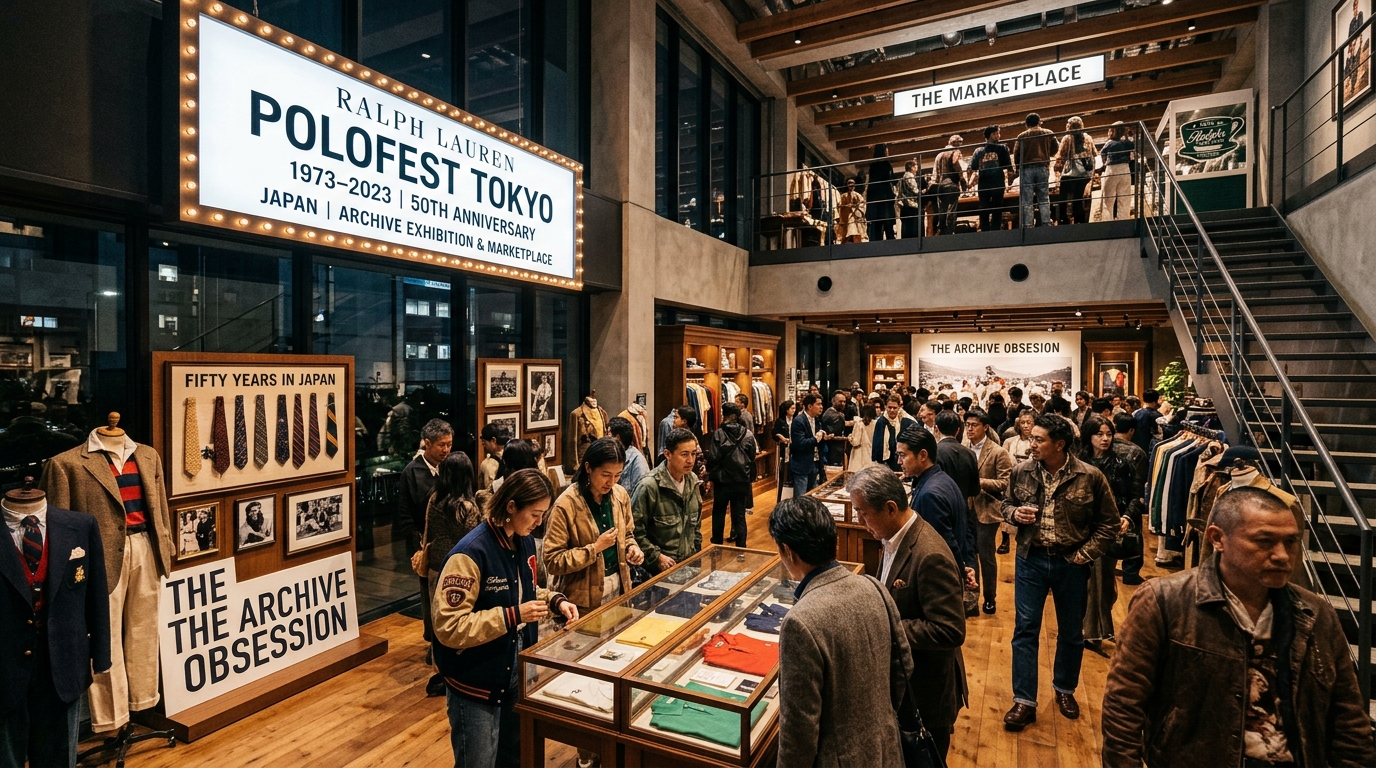
The Ralph Lauren PoloFest Tokyo opened its doors this October as a sprawling four-day testament to archival obsession. Staged inside a modern two-story building in the heart of the Japanese capital, the event marked the fiftieth anniversary of the brand's arrival in the country. It was part museum and part marketplace. Fans flew in from as far as Detroit to witness the spectacle.
The courtyard quickly became a runway of vintage flexes. Attendees sipped custom coffee blends while comparing their rare grails.
What sets this gathering apart from a standard fashion week activation is the sheer weight of history on display. Eighteen elite vintage collectors from across the globe brought their rarest artifacts to the marketplace. It felt less like a pop-up and more like an anthropological summit. Decades of Ralph Lauren's vision of America were compressed into a singular physical space.
The sheer devotion of these collectors was entirely palpable.
On Thursday night, the celebrity-packed opening party set the tone. Stars like André 3000 and Conan Gray mingled with menswear veterans like Hirofumi Kurino. They all shared an unspoken reverence for the iconic pony.
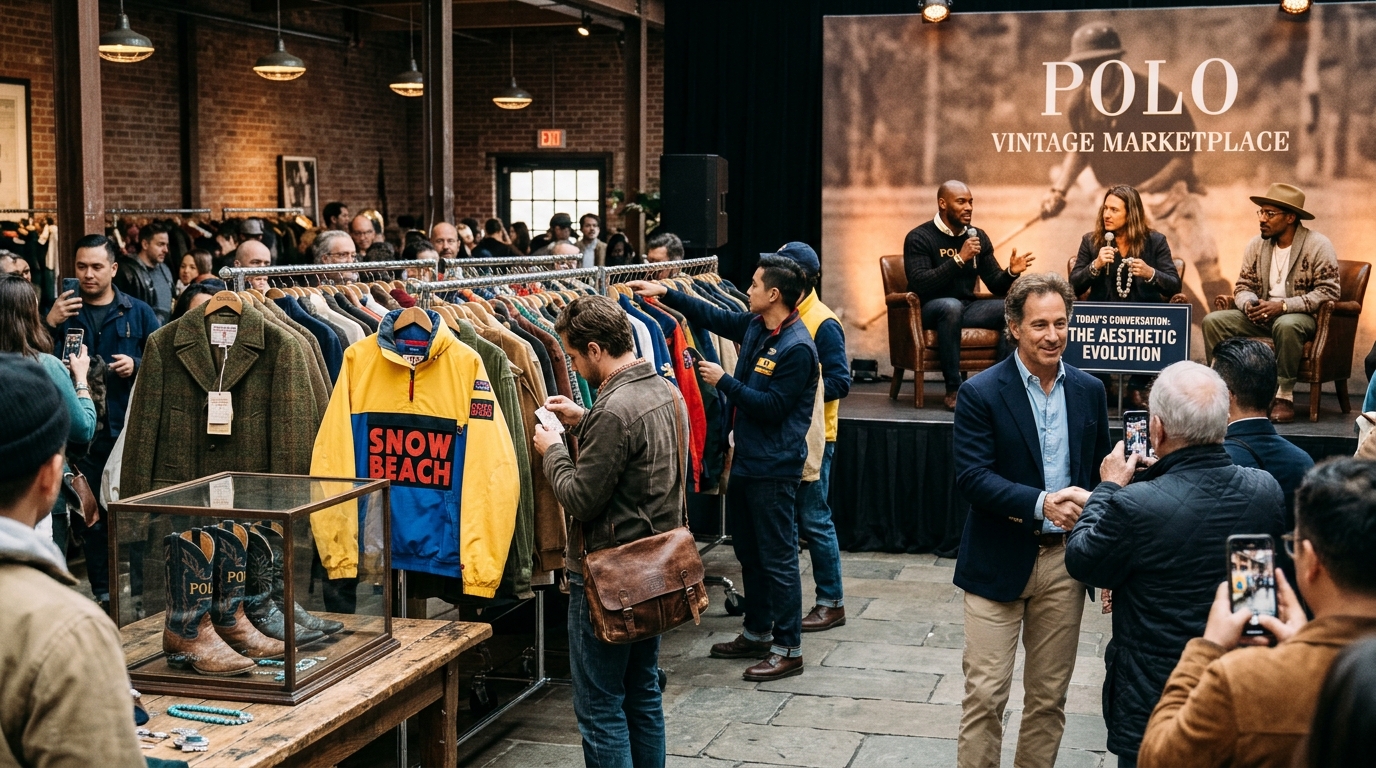
The details found on the marketplace racks demanded close inspection. A deadstock 1970s Harris tweed Polo Coat hung near an original Snow Beach jacket. Buyers scoured endless rows of defunct sub-labels like Polo Country and Polo Sportsman. One could even spot elusive Polo cowboy boots. These pieces are not merely old clothes. They are tactile artifacts of cultural history.
Prices reflected the rarity of the garments. Long-defunct sporting lines fetched top dollar from eager international buyers.
The second floor hosted an impressive speaker series. Supermodel Tyson Beckford reflected on his role in defining the brand's aesthetic in the nineties. Neil Zarama discussed his authentic Native American silverwork. André 3000 sat down on Sunday morning to discuss fashion and aging. He even hinted at a return to hip-hop and declared his desire to eventually be buried in Japan.
The programming elevated the retail experience significantly.
David Lauren navigated the festival floors with clear purpose. He engaged in retail politics by shaking hands and posing for selfies. The company vice chairman noted that this specific event was roughly twenty years in the making.
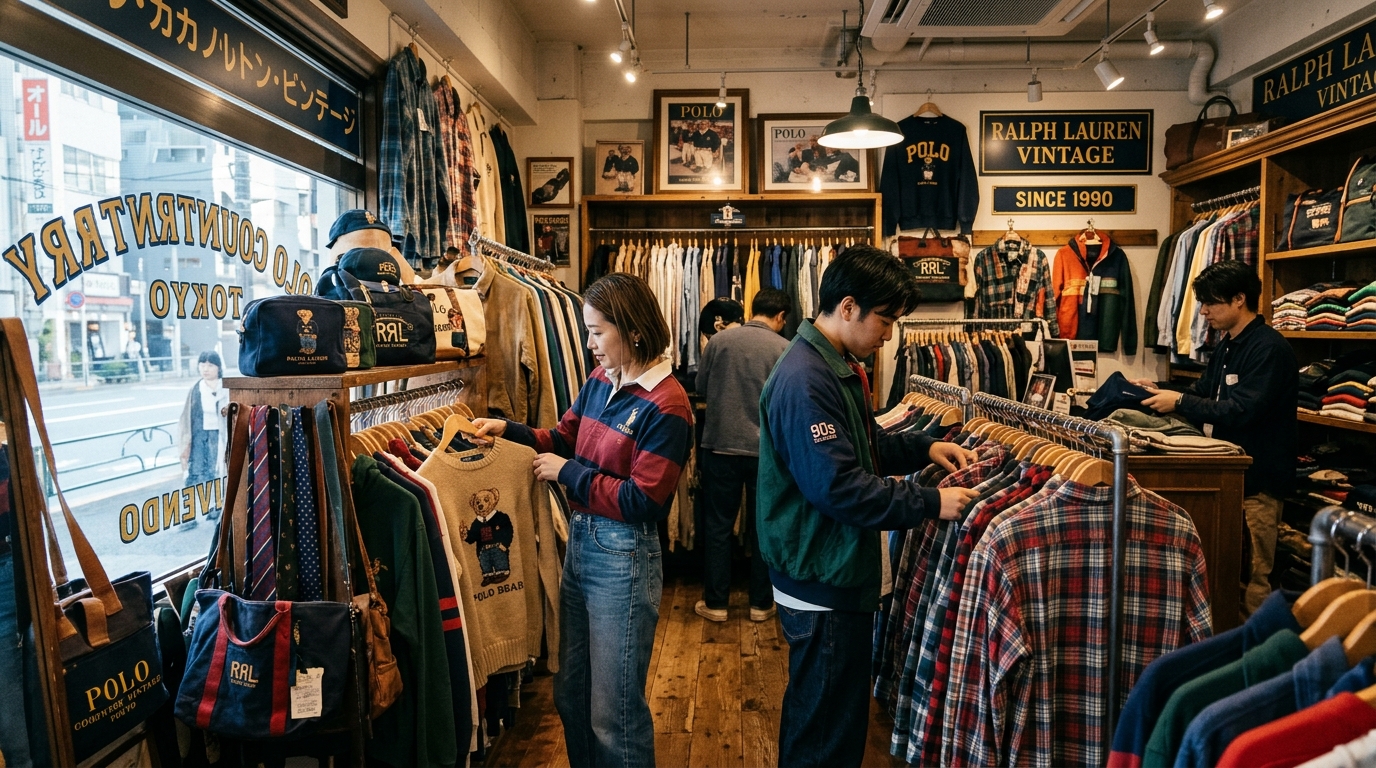
Japanese consumers have long treated Ralph Lauren with a localized reverence. Tokyo harbors highly curated secondhand stores dedicated solely to the brand. Decades ago, executives considered opening an official vintage shop in the city. Other projects took precedence at the time. Yet the abiding love of the Japanese market never faded from the executive suite's collective memory.
An exclusive merchandise shop offered customized blazers and skate decks. The lines remained impossibly long throughout the weekend.
The market context here is highly instructive for heritage brands. Ralph Lauren understands that its most valuable asset is its own mythology. By sanctioning a vintage marketplace, the brand effectively validates the secondary market. They do not fight the archivists. They invite them in and provide a beautifully appointed stage. This strategy cements enduring consumer loyalty.
Other fashion houses should take careful notes on this move.
The influence of Lo Life culture was impossible to ignore. Thirstin Howl the Third brought his foundational Brooklyn perspective to the Tokyo panels. This cross-cultural exchange highlights how a traditional prep aesthetic was radically recontextualized by hip-hop artists.
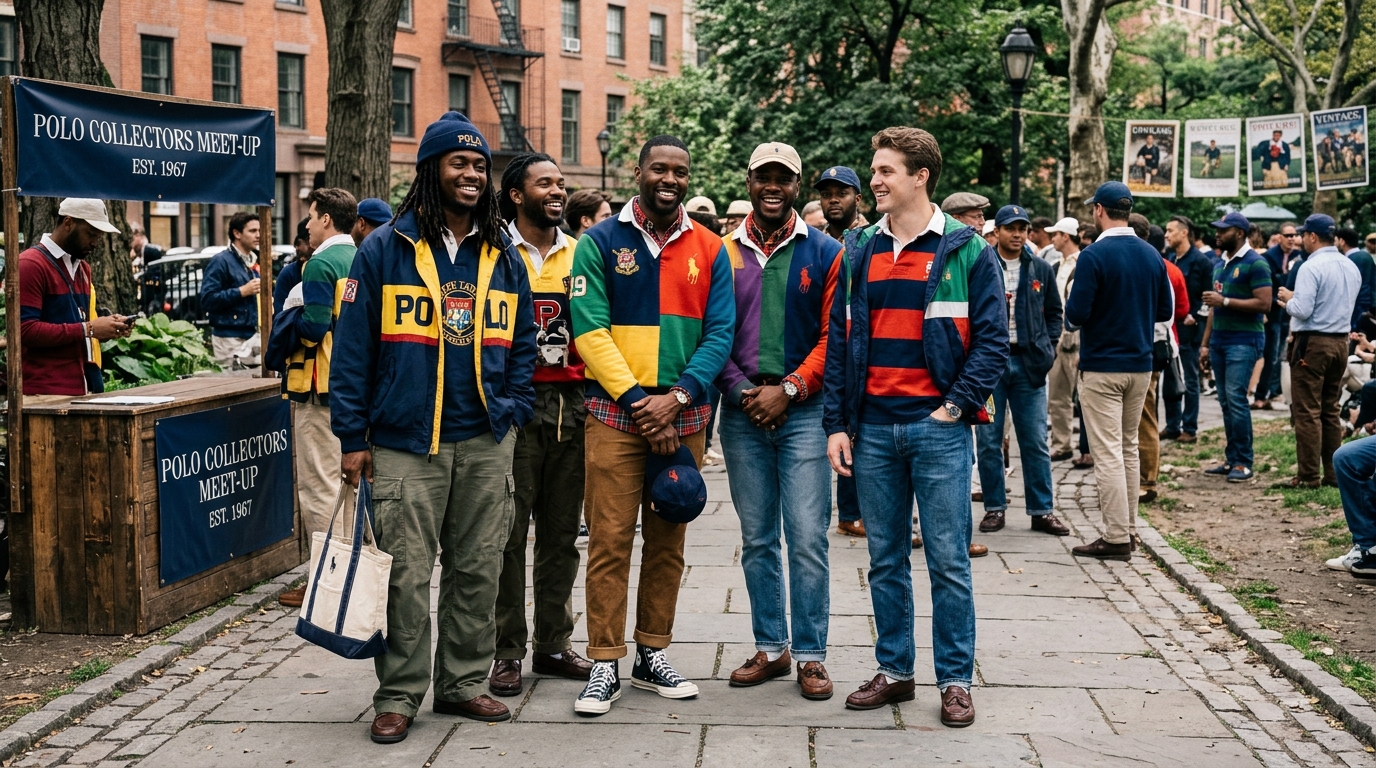
We must also consider the craftsmanship of the heritage items. A perfectly faded denim button-down from 1990 tells a story of durable construction. The heavy plaid flannel shirts on display survived decades of wear. These pieces were built for longevity. Modern fast fashion simply cannot replicate the authentic patina of a thirty-year-old Polo coat constructed from heavy wool.
True luxury is ultimately defined by how well a garment ages.
The entire weekend operated as a masterclass in brand longevity. Next year marks the sixtieth anniversary of the label. This festival served as an early prelude to what will surely be a monumental year for the apparel company.
As the curtain closed on Sunday, the verdict was clear. The Tokyo event successfully translated a distinctly American subculture into a global summit. It remains to be seen if another edition will follow in the future.
Frequently Asked Questions
Why was PoloFest held in Tokyo?
The event was staged in Tokyo to celebrate the 50th anniversary of Ralph Lauren opening its first store in Japan. It also served as a tribute to the dedicated Japanese collectors who have preserved the brand's vintage archives for decades.
Who were the keynote speakers at PoloFest Tokyo?
The speaker series featured prominent figures including André 3000, supermodel Tyson Beckford, Lo Life originator Thirstin Howl the 3rd, and Native American silversmith Neil Zarama.
What kind of vintage items were sold at the marketplace?
Eighteen global collectors sold rare items including 1970s Harris tweed Polo Coats, original Snow Beach jackets, Polo cowboy boots, and gear from defunct sub-brands like Polo Country and Polo Sportsman.
Is Ralph Lauren planning another PoloFest?
The company has not officially confirmed whether there will be future iterations of PoloFest. Executives noted the success of the Tokyo event but left the possibility of future festivals open-ended.
What is the Ralph Lauren Authentic Maker program?
It is an initiative that highlights skilled artisans whose craft aligns with the brand's heritage aesthetic. At PoloFest, Neil Zarama represented this program through his Whirling Log and Arrow silverwork.