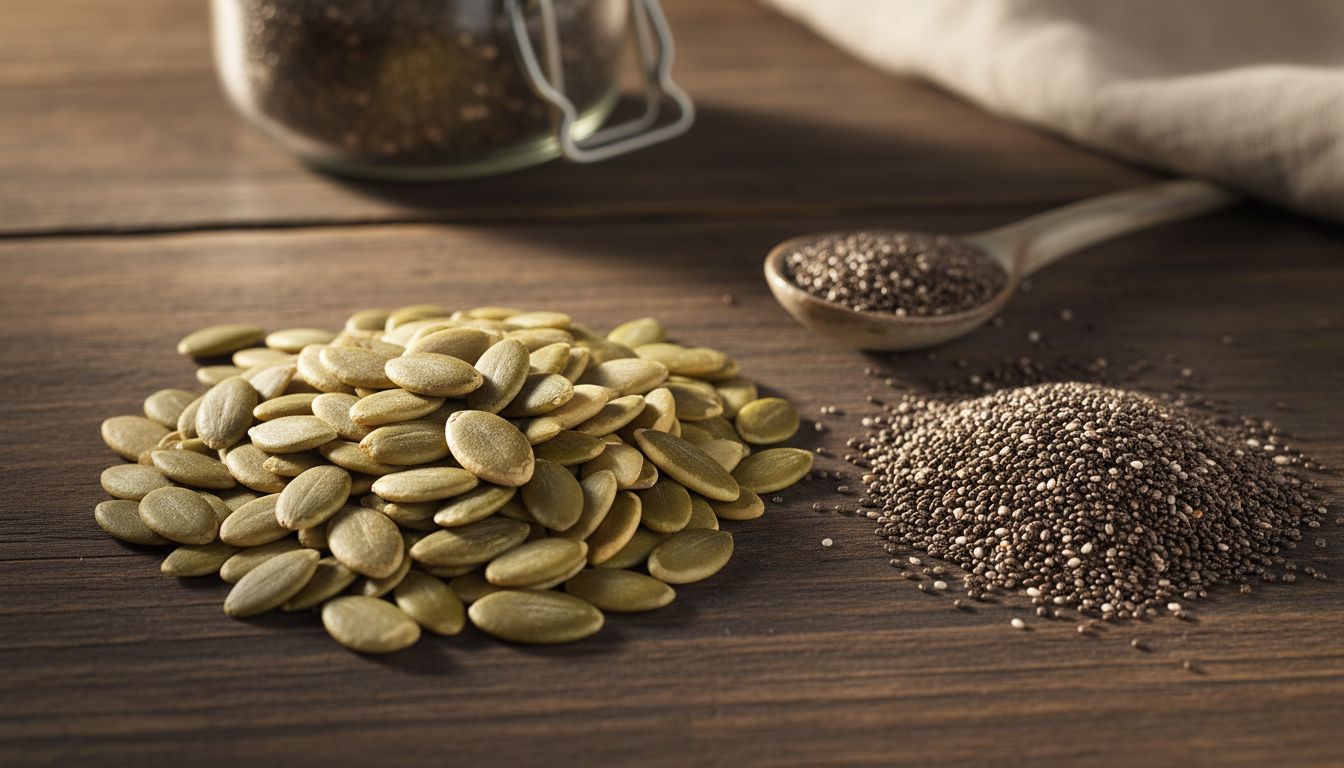
The wellness circuit has always been a landscape of shifting allegiances. One season we are devoted to the hydrating promise of the chia seed. The next we find ourselves reaching for the emerald glint of a pepita. In the pristine kitchens of those who treat nutrition with the same rigor as a couture fitting, the question remains. Which of these tiny powerhouses actually earns its shelf space.
It is a debate that transcends simple caloric math. We are looking at two entirely different biological philosophies. Chia seeds represent the architecture of absorption. They are the masters of the slow burn and the internal cleanse. Pumpkin seeds on the other hand are the engines of mineral density and protein-forward energy.
Nutritionists suggest that the winner depends entirely on your personal aesthetic for health. If your goal is the structural integrity of the gut, chia is your primary tool. Two tablespoons provide nearly ten grams of fiber. This is not just a number on a label. It is a functional gel that stabilizes blood sugar and tethers toxins for removal.
The internal shower drink has become a viral phenomenon for a reason. It uses the physical property of Salvia hispanica to create a mucilaginous texture that moves through the digestive tract with a specific kind of grace. It is effective. It is functional. But for some it is a texture that lacks the sensory satisfaction of a solid meal.
This is where the pumpkin seed makes its elegant entrance. It offers a crunch that chia simply cannot replicate. More importantly it brings a mineral profile that reads like a high-end supplement list. Magnesium for the nervous system. Zinc for the skin and immune function. Iron for the vitality of the blood. It is a more robust offering for those who find the gel of chia a bit too ephemeral.
When we look at the protein count the disparity becomes even more pronounced. Pumpkin seeds offer roughly nine grams of protein per ounce. Chia seeds provide about half of that. For the individual looking to maintain muscle tone or support a high-intensity lifestyle the pumpkin seed is the clear choice for structural support. It is the architectural beam to chia’s fluid foundation.
Market context suggests a growing fatigue with the high-maintenance nature of chia. While the no-cook chia pudding is a staple of the meal-prep elite it requires foresight. It needs hours in the refrigerator to reach its potential. Pumpkin seeds require nothing but a light roast. They are the immediate gratification of the seed world.

The verdict is rarely a matter of one being superior to the other in a vacuum. It is a matter of utility. Use chia when you need the quiet work of digestion and hydration. Reach for pumpkin seeds when you need the loud energy of protein and minerals. They are not rivals. They are a well-balanced wardrobe for the body.
One offers the soft drape of fiber while the other provides the structured tailoring of protein. In a truly sophisticated diet there is room for both. The most enlightened approach is to stop searching for a singular hero and start building a toolkit. Mix them. Match them. Let them serve different needs at different hours of the day.
Frequently Asked Questions
Which seed is better for weight loss specifically?
Chia seeds are generally preferred for weight management because they expand in the stomach and promote a feeling of fullness. The high fiber content slows down the absorption of sugar which helps prevent the insulin spikes that lead to fat storage.
Do pumpkin seeds really help with sleep quality?
They contain a significant amount of tryptophan which the body uses to produce serotonin and melatonin. Combined with their high magnesium content they act as a natural relaxant for the nervous system.
Can I eat chia seeds without soaking them first?
It is possible but you must be cautious with hydration. Because chia seeds absorb many times their weight in liquid they can cause blockers or discomfort in the digestive tract if they do not have enough water to expand properly.
Are pumpkin seeds higher in calories than chia seeds?
Yes pumpkin seeds are slightly more calorie-dense due to their higher fat and protein content. An ounce of pumpkin seeds typically contains about 160 calories while an ounce of chia seeds is closer to 138 calories.
Which seed provides more Omega-3 fatty acids?
Chia seeds are the undisputed winner in the Omega-3 category specifically providing alpha-linolenic acid. Pumpkin seeds are higher in Omega-6 fatty acids and monounsaturated fats which are healthy but serve different anti-inflammatory functions.
How should I store my seeds to keep them fresh?
Both seeds contain oils that can go rancid if exposed to heat and light for too long. Storing them in a cool dark pantry is standard but keeping them in the freezer can significantly extend their shelf life and preserve their nutrient integrity.
Is it safe to eat both seeds in the same meal?
There is no medical reason to avoid combining them. In fact many nutritionists recommend a seed rotation or a seed blend to ensure you are receiving a full spectrum of minerals and different types of dietary fiber.
Which is better for bone health?
Chia seeds offer significantly more calcium per serving which is vital for bone density. However pumpkin seeds provide magnesium and zinc which are also essential co-factors for maintaining a strong skeletal structure.