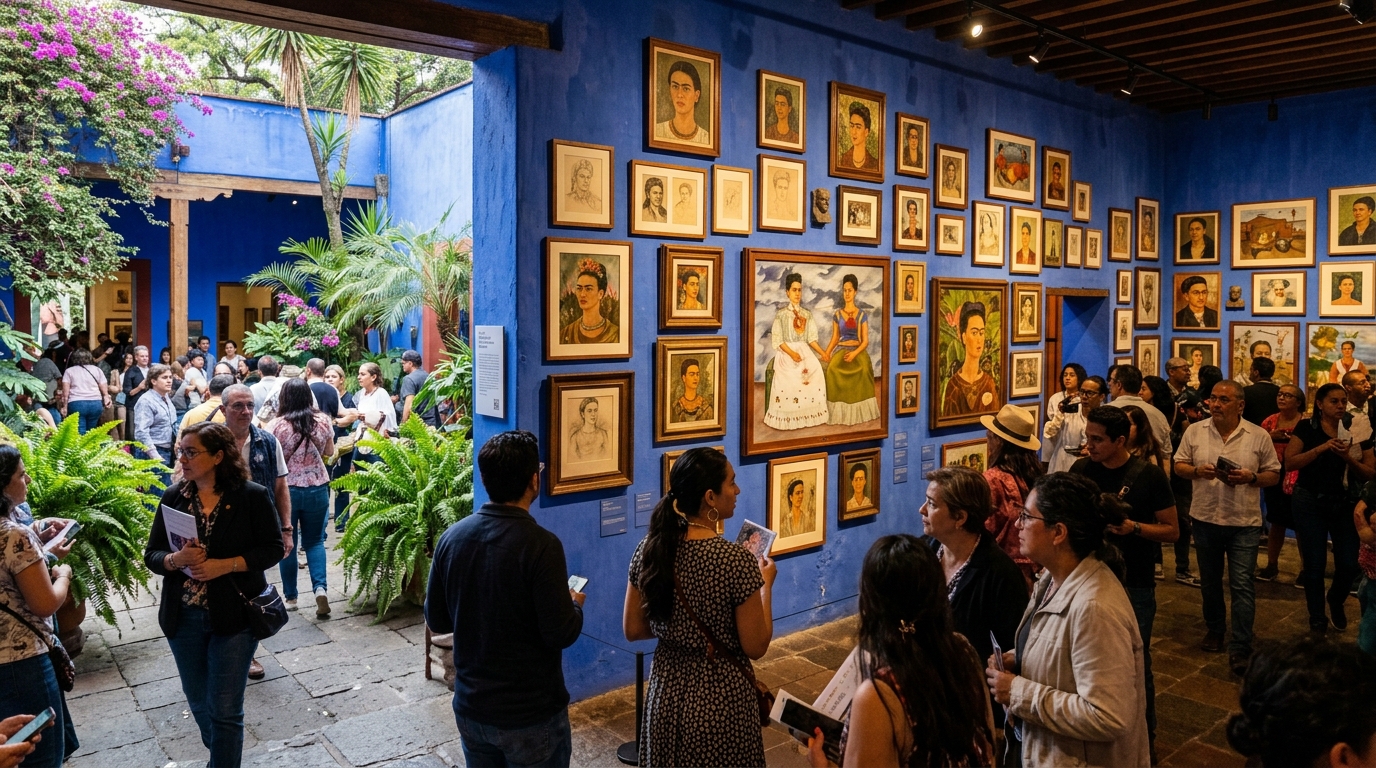
The doors to the Museo Dolores Olmedo's Frida Kahlo collection have finally swung open again in Xochimilco. The musical cries of blue feathered peacocks welcome visitors back to the sixteenth-century hacienda known as La Noria.
Following a six-year closure that began during the global pandemic, the May 30 reopening restores access to the most extensive holdings of Frida Kahlo and Diego Rivera in the world. The return of these masterworks follows a fierce public debate regarding a proposed relocation to Parque Aztlán. Doña Lola’s original vision ultimately prevailed. The art remains exactly where it belongs.
This is a massive victory for cultural preservation. The estate retains its highly distinctive atmosphere.
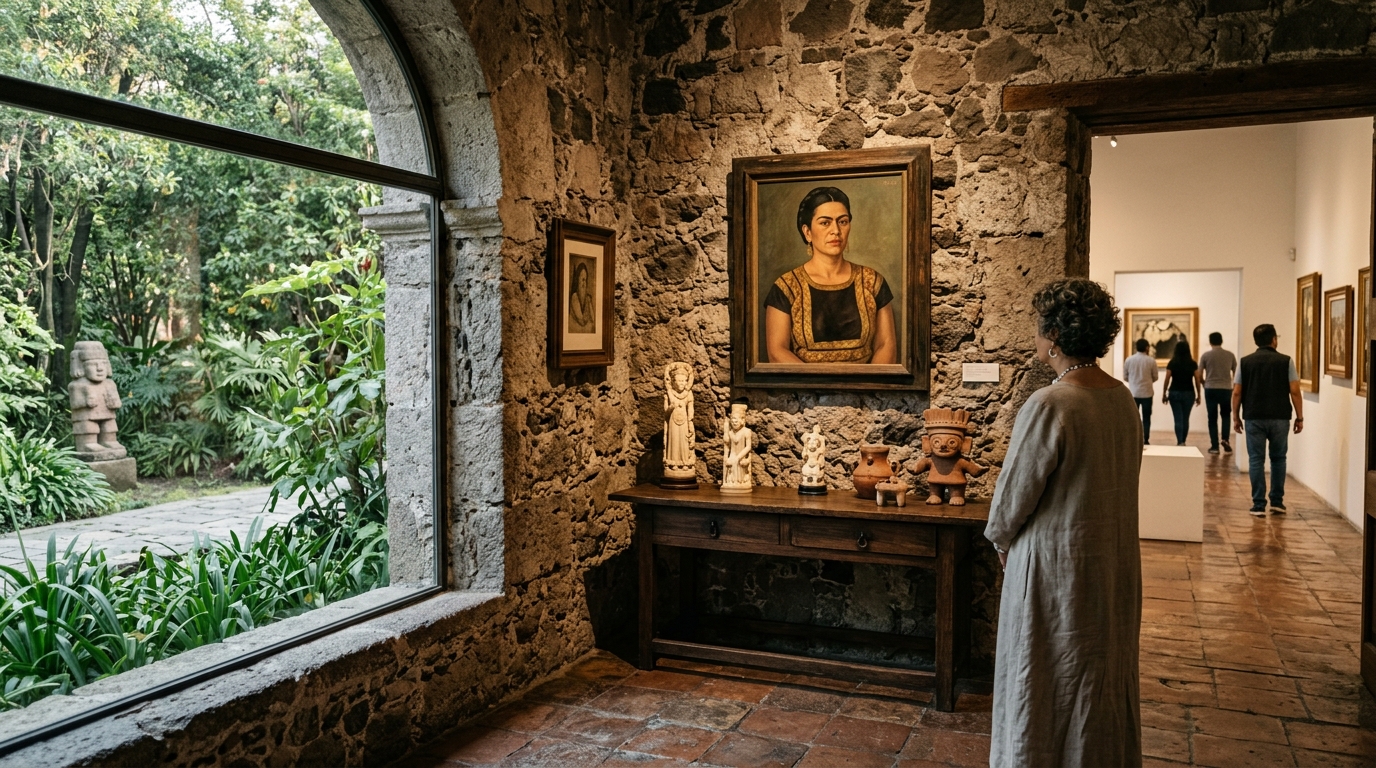
Beyond the sheer volume of artwork, the architectural preservation of La Noria deserves distinct praise. The sixteenth-century bones of the hacienda provide a deeply textured backdrop. Modern museums often rely on sterile white cubes to display historical works. This estate takes the opposite approach. The volcanic stone paths and lush botanical gardens frame the art within its native context.
It is an environment that actively breathes. The historic setting enhances the visual experience.
Dolores Olmedo was a formidable businesswoman who navigated a male dominated world with unparalleled sharpness. Her newly accessible private spaces reveal a life steeped in supreme opulence. Ivory pieces and pre-Hispanic objects fill the rooms.
Portraits by Rivera hang proudly on the walls of her palatial bedroom.
The complex bond between Olmedo and Rivera is mapped out across eight newly curated galleries. Ninety-eight of Rivera’s works are arranged chronologically. They expose his technical range far beyond the famous murals. Viewers are treated to Cubist sketches, tender landscapes, and a series of sunset views painted in Acapulco during the final year of his life. His mastery is undeniable.
Yet the true gravitational pull of the estate lies within the two dedicated Frida Kahlo galleries.
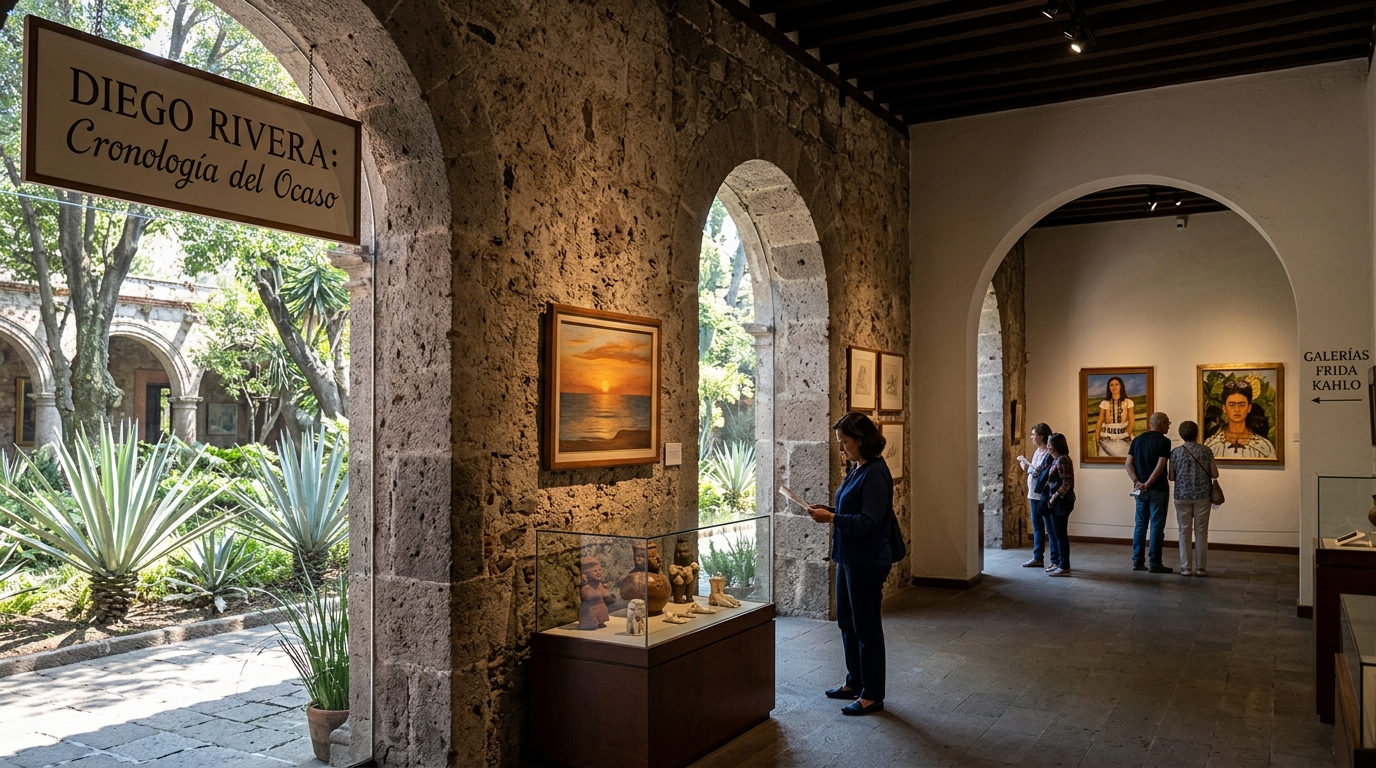
Twenty-six of Kahlo's works demand immediate attention. The striking masterpiece The Broken Column from 1944 hangs in quiet defiance against a stark black wall. It is a brilliant study of physical suffering balanced by an unwavering psychological strength.
Close by sits the gut wrenching Henry Ford Hospital painted in 1932.
Olmedo was initially quite resistant to Kahlo’s work. She only acquired these phenomenal pieces at Rivera’s direct insistence. That reluctant purchase inadvertently secured Kahlo’s global legacy. These canvases do not simply chronicle pain. They illustrate how Kahlo transformed immense physical trauma into an enduring visual language. Illness became a space where life could be fully accepted.
Her fierce artistic discipline rightfully takes precedence over her personal tragedies.
This staggering collection provides a fascinating counterpoint to Kahlo’s own Casa Azul in Coyoacán. While Casa Azul acts as a deeply intimate reliquary of the artist's daily life, La Noria functions as a grand institutional showcase.
Both geographic locations are absolutely essential. They offer two halves of a fiercely complicated creative existence.
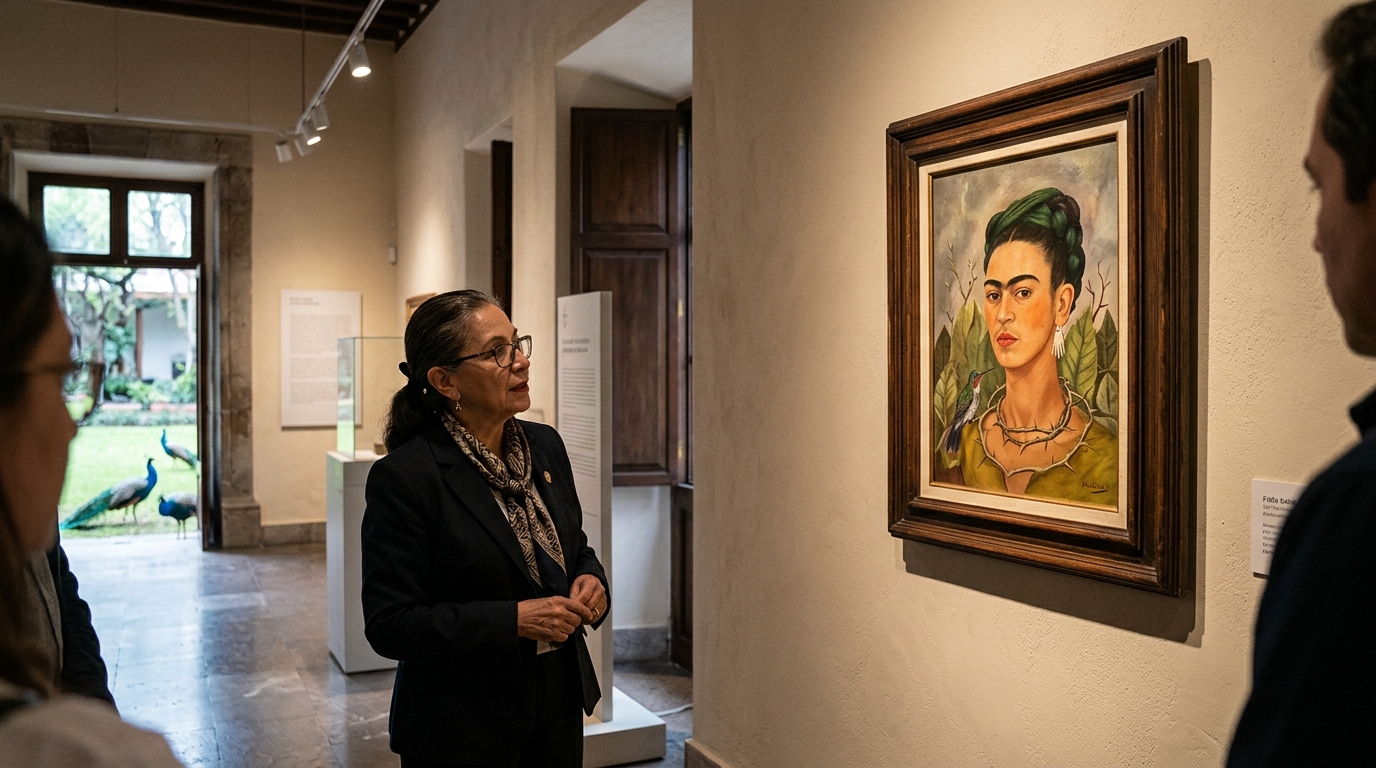
The presentation of Kahlo's work has evolved significantly over the decades. In the late twentieth century, her paintings were often overshadowed by her tumultuous biographical narrative. Curators at this restored facility have intentionally shifted the focus back to her technical prowess. The careful lighting on her canvases highlights her meticulous brushwork and nuanced color palettes.
The current administration faces immense pressure to lend out these iconic Mexican masterpieces.
The market value of this collection is practically incalculable today. These pieces routinely travel to premier global institutions. Some canvases recently returned from a major exhibition in Houston. The immediate institutional focus remains entirely local.
Local preservation groups continue to advocate for a strict heritage declaration.
The restoration of the Museo Dolores Olmedo is a true masterclass in cultural stamina. It actively protects an invaluable art archive from the threat of modern institutional sanitization. The peacocks still roam the historical gardens just as they did decades ago. Against all logistical odds, the vivid legacy of Mexican modernism remains perfectly intact.
Frequently Asked Questions
Where is the newly restored Museo Dolores Olmedo located?
The museum is located in Xochimilco, Mexico City. It sits within a historic sixteenth-century hacienda known as La Noria.
When did the Museo Dolores Olmedo officially reopen to the public?
The estate officially reopened its doors on May 30, 2026. This followed a massive six-year closure that initially began during the global pandemic.
How many works by Frida Kahlo are featured in the museum?
The current exhibition showcases exactly 26 original works by Frida Kahlo. This includes iconic masterpieces like The Broken Column and Henry Ford Hospital.
Did the museum relocate its art collection to Parque Aztlán?
No. Despite controversial proposals from the governing trust to move the collection, public backlash and advocacy groups successfully kept the art at La Noria.
Why did Dolores Olmedo originally purchase Frida Kahlo's art?
Olmedo was initially not a fan of Kahlo's artistic style. She acquired the expansive collection primarily at the direct request of Diego Rivera.
How many works by Diego Rivera does the museum hold?
The museum displays 98 pieces by Diego Rivera across eight chronologically arranged galleries. The collection spans Cubist sketches, murals, and tender landscapes.
What is the difference between Museo Dolores Olmedo and Casa Azul?
Casa Azul in Coyoacán is Kahlo's former home and functions as an intimate biographical space. The Museo Dolores Olmedo serves as a grand institutional showcase with an extensive fine art collection.