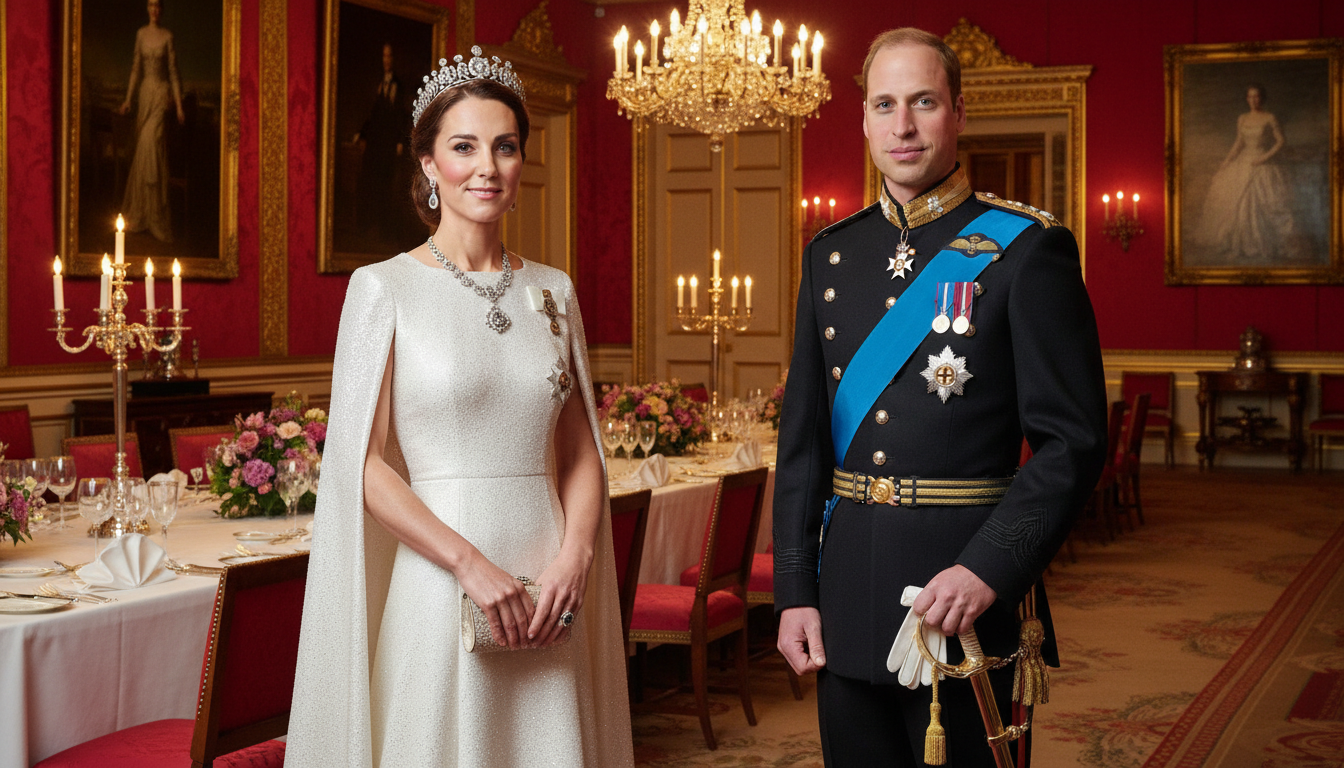
The Nigerian State Banquet at Windsor Castle on March 18 2026 served as more than just a diplomatic milestone. It acted as a definitive stage for the Prince and Princess of Wales to unveil a portrait that signals a shift in the Windsor visual vocabulary. Captured by Christianah Ebenezer, a Lagos-born photographer now based in London, the image moves away from the rigid, distant compositions of the past. It offers a glimpse into a partnership that is increasingly comfortable with its own modern gravity.
This is a portrait of intimacy tucked inside the armor of tradition.
The setting itself was a departure from the sterile studio backdrops of old. Posed beside a blossoming climbing plant within the castle grounds, the couple appeared vibrant rather than institutional. Kate leaned into William with a physical closeness rarely seen in official state photography. It was a choice that felt deliberate. It humanized the future King and Queen without stripping away the necessary mystique of their roles.

For the evening, the Princess of Wales chose a bespoke forest green gown by Andrew Gn. This was a masterclass in sartorial diplomacy. The shade was a direct homage to the green of the Nigerian flag. It was a gesture of respect that felt deeply considered. The gown featured a high square neckline and sheer bishop sleeves that gathered elegantly at the wrists. It was a silhouette that balanced the modesty expected of a state event with a sharp, modern edge.
The dress has a fascinating history of its own. Andrew Gn retired from his eponymous label in 2023. This piece was actually commissioned in 2022. It sat in the royal archives for four years before finding its perfect moment.
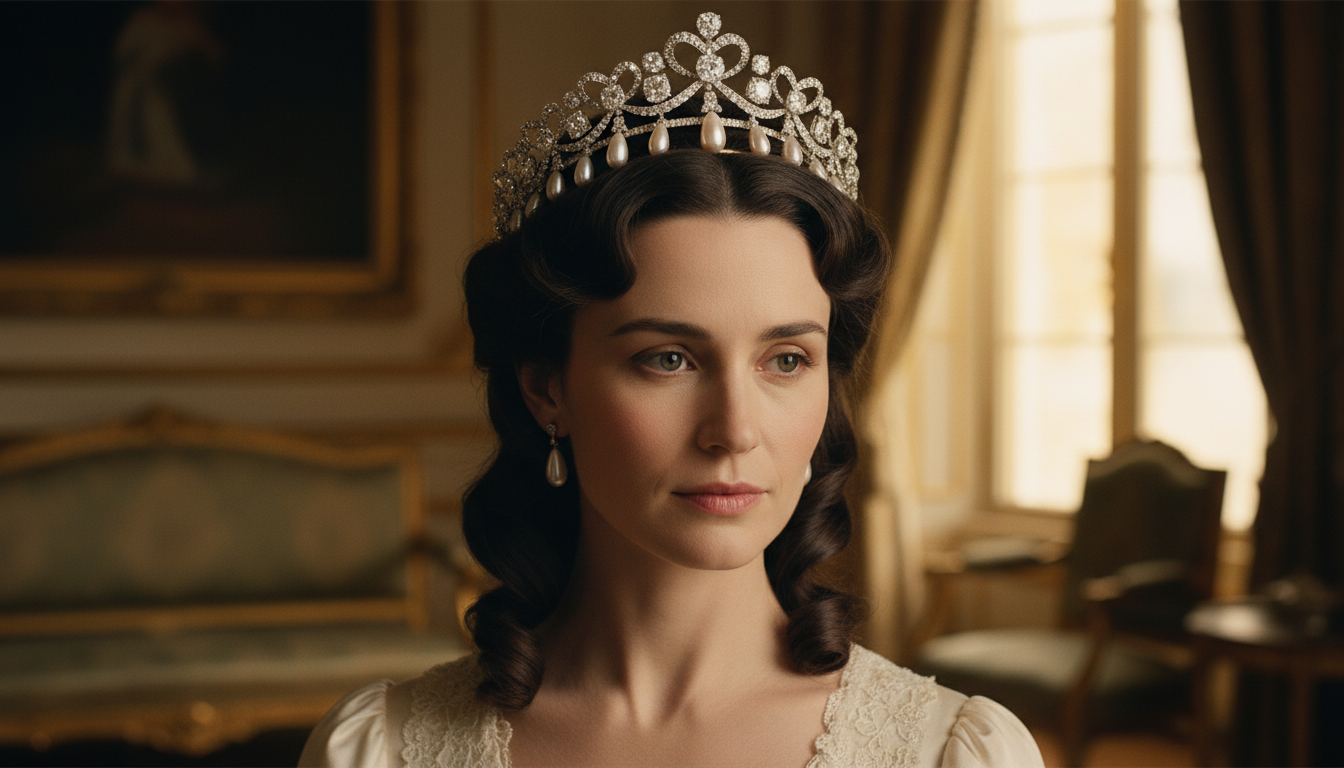
This is heritage design at its most effective. The choice to wear a retired designer’s work speaks to a desire for longevity over trend. It suggests that Kate views her wardrobe as a collection of artifacts rather than seasonal disposables. She paired the look with Queen Mary’s Lover’s Knot Tiara. This 1913 masterpiece from Garrard remains her most trusted headpiece. It carries a heavy historical weight, having been a favorite of the late Princess Diana.
The jewelry choices continued the theme of continuity. Kate wore diamond and pearl drop earrings that belonged to the late Queen Elizabeth II. On her feet were the same green satin Manolo Blahnik heels she wore for her first official joint portrait in 2022. These repeating elements create a visual thread. They connect her current role to the milestones of her past.
Earlier in the day, the Princess had set a different tone. She welcomed President Bola Ahmed Tinubu and First Lady Oluremi Tinubu in a grey coatdress by Tolu Coker. Choosing a British-Nigerian designer for the arrival ceremony was a stroke of genius. The outfit featured 1980s-inspired white lapels and a corset-style lace-up back. It bore a striking resemblance to a red Catherine Walker ensemble worn by Princess Diana in 1989.
This was not merely a copy. It was an evolution. Coker’s work is known for its intersectional identity. By bringing this aesthetic into the royal fold, Kate acknowledged the modern fabric of Britain. The move was widely seen as a response to the ongoing evolution of the Commonwealth.
The market impact of these choices was immediate. Fashion analysts noted the appearance of Layal Tinubu at the banquet. The President’s daughter-in-law wore a green Talbot Runhof gown that Kate had previously worn in 2025. This circularity highlights the global reach of the Princess’s influence. It creates a shared visual language between the hosts and their guests. It is the definition of soft power.
The event took place against a backdrop of palace complexity. The recent legal scrutiny surrounding Andrew Mountbatten-Windsor has cast a shadow over the institution. In this context, the new portrait of William and Kate acts as a stabilizing force. It presents a vision of the future that is steady, stylish, and increasingly relatable.
Frequently Asked Questions
Who photographed the new portrait of Prince William and Kate?
The portrait was taken by Christianah Ebenezer. She is a British-Nigerian photographer who was born in Lagos and moved to London as a child. She has previously worked with the Duchess of Edinburgh and her work has been featured in the National Portrait Gallery and on the cover of Elle magazine.
What is the significance of the green dress Kate wore?
The forest green gown was designed by Andrew Gn. The color was a diplomatic tribute to the Nigerian flag, which features green and white. This practice is known as flag-dressing. The gown was a bespoke creation from 2022, which is notable because the designer retired in 2023.
Which tiara did the Princess of Wales wear to the Nigerian State Banquet?
She wore Queen Mary’s Lover’s Knot Tiara. It was commissioned by Queen Mary in 1913 or 1914 and was created by the House of Garrard. The tiara is made of diamonds and features nineteen hanging oriental pearls.
Who designed the grey coatdress Kate wore for the arrival ceremony?
The grey coatdress was designed by Tolu Coker. Coker is a British-Nigerian designer based in London. The choice was significant as it directly honored the heritage of the visiting Nigerian delegation while showcasing a rising talent in the British fashion industry.
How did the portrait differ from previous royal photos?
The portrait is considered more relaxed and personal. Instead of a formal indoor setting, the couple is posed outdoors near a blossoming plant. Kate is also seen leaning into William, which conveys more physical intimacy and a modern partnership compared to traditional, side-by-side royal photography.
Was there a tribute to Princess Diana in the outfits?
Yes. The daytime Tolu Coker coatdress featured white lapels and a double-breasted front that mirrored a 1989 Catherine Walker outfit worn by Princess Diana. Additionally, the Lover’s Knot Tiara is a piece famously associated with the late Princess of Wales.