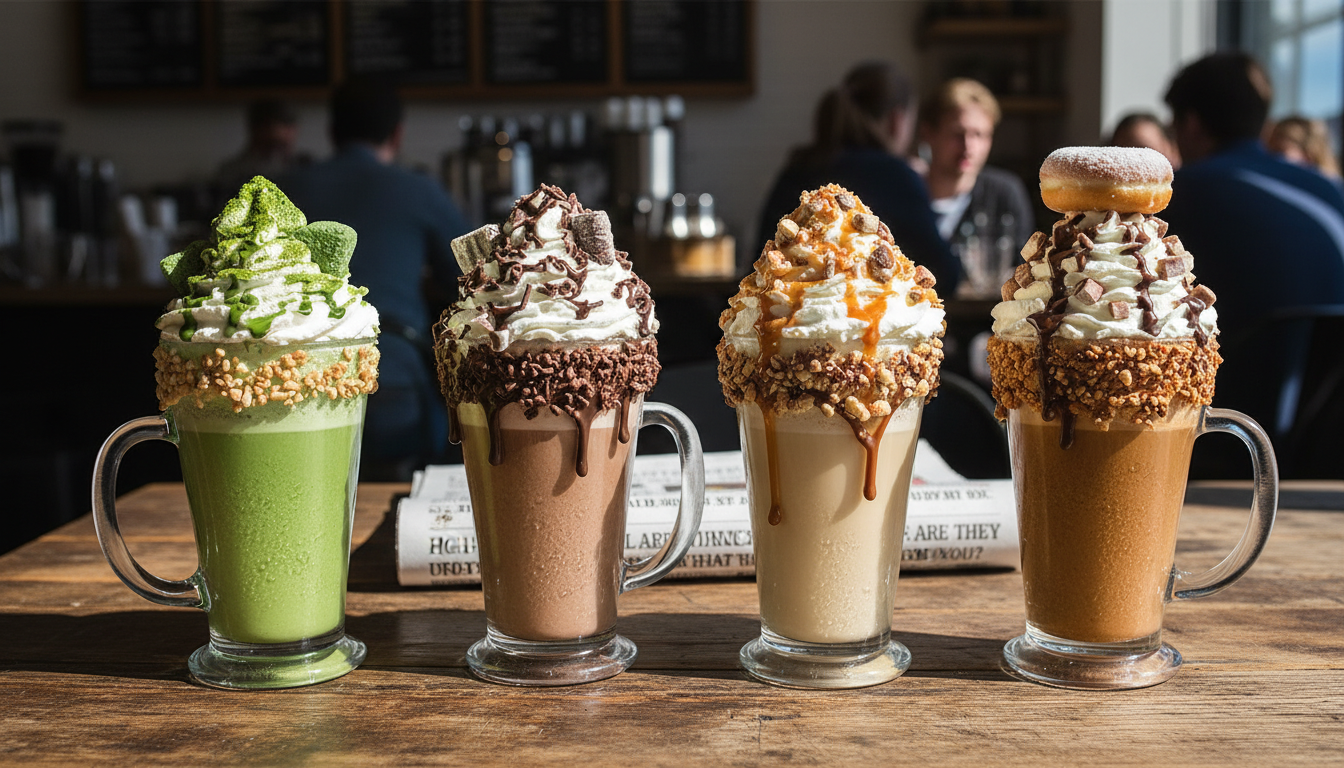
In Austin, Texas, the cultural divide between wellness and indulgence recently found a new flashpoint. Health and Human Services Secretary Robert F. Kennedy Jr. took to the stage on February 26 during an Eat Real Food rally to issue a pointed critique of high-sugar coffee drinks. His focus was narrow but sharp. He targeted the habitual consumption of beverages containing upwards of 115 grams of sugar. This specific figure was not pulled from thin air. It represents the upper limits of handcrafted beverages sold across the country every morning.
This was not merely a political statement. It was a direct challenge to the architectural integrity of the modern American breakfast.
The numbers released in the wake of this rally are staggering when viewed through a clinical lens. A medium Dunkin’ Frozen Hot Chocolate carries 121 grams of sugar and 690 calories. This exceeds the American Heart Association’s daily recommendation of 25 grams for women and 36 grams for men by an astronomical margin. Even the more common orders like a medium Caramel Craze Latte surpass a standard can of Coca-Cola in sugar content. A can of Coke contains 39 grams of sugar. The latte contains 57 grams.
The industry calls these beverages coffee. Nutritionists call them desserts.
Market dominance for brands like Dunkin’ and Starbucks relies on the transformation of a simple stimulant into a complex confection. It is a brilliant bit of alchemy. They have turned a morning necessity into a daily indulgence. For many consumers, these drinks are not a one-off treat. They are a daily habit. This ritualistic consumption is what concerns health experts. When a beverage becomes a staple rather than a luxury, the metabolic cost begins to accumulate.

The craft behind these drinks is centered on mouthfeel and palatability. A medium Butter Pecan Swirl Frozen Coffee from Dunkin’ contains 129 grams of sugar. This includes 117 grams of added sugars. The texture is achieved through whole milk and heavy syrups. At Tim Hortons, the Caramel Iced Capp reaches 136.2 grams of sugar. These are not coffee drinks in the traditional sense. They are liquid sugar delivery systems with a hint of caffeine. The flavor profiles are engineered to be addictive and satisfying.
Secretary Kennedy specifically highlighted the impact on teenage girls. This demographic is a primary consumer of aesthetic, highly customizable beverages.
The reaction from the public and political figures was swift. Massachusetts Governor Maura Healey defended the local institution of Dunkin’ against the critique. However, the data remains difficult to ignore. Senator John Kennedy of Louisiana later echoed these concerns on the Senate floor. He compared a caramel macchiato to twelve Chips Ahoy cookies. He also noted it contains as much sugar as four Krispy Kreme glazed donuts. These comparisons provide a visceral understanding of the nutritional density involved.
Nutritionist Sally Cohen offers a more nuanced perspective on the matter. She cautions against the outright demonization of specific nutrients.
Creating an environment of guilt or shame can be counterproductive to long-term health. The risk of cardiometabolic issues is real when sugar is consumed beyond a certain amount. However, the psychological impact of food shaming is also a concern. The goal should be awareness rather than prohibition. Most people do not realize their morning coffee has the same sugar content as a pint of ice cream. Once that information is available, the choice becomes more intentional.

The market context is shifting toward transparency. Consumers are starting to look at the back of the menu. Brands are responding with better-for-you options. Starbucks offers an Iced Vanilla Protein Latte with 29 grams of protein. McDonald’s has an Iced Caramel Macchiato with 35 grams of sugar. These are still high in sugar compared to black coffee, but they represent a significant reduction from the blended frozen varieties. The shift is subtle but necessary for a public becoming more cognizant of metabolic health.
Enjoying these drinks occasionally is the consensus among dietitians. They should be treated like the liquid desserts they are.
Reducing the size of the beverage is an effective strategy. One can also modify the recipe to include fewer pumps of syrup. Preferences for sweetness can be retrained over time. If a consumer gradually moves from a 120-gram sugar drink to a 40-gram sugar drink, the palate adjusts. It is about a pattern of eating rather than a single isolated event. A one-off indulgence does not define a person's health profile.
The verdict on high-sugar coffee drinks is clear but not fatalistic. They are objectively high in sugar and calories. They far exceed the recommended daily limits for most adults. However, they are not poison. They are a luxury item that has been marketed as a daily essential. Reclassifying them as treats allows for a healthier relationship with the morning commute. It also places the responsibility back on the consumer to make an informed decision at the counter.

Frequently Asked Questions
What did RFK Jr. say about Dunkin’ and Starbucks coffee?
Secretary Robert F. Kennedy Jr. criticized the high sugar content in their beverages, specifically citing an iced coffee with 115 grams of sugar. He called on the companies to provide safety data proving such high levels are safe for consumption by teenagers.
Which coffee drink has the most sugar?
Based on current menu data, the Tim Hortons Caramel Iced Capp is among the highest with 136.2 grams of sugar. Dunkin’s Butter Pecan Swirl Frozen Coffee follows closely with 129 grams of sugar.
How does the sugar in coffee compare to a can of soda?
A standard 12-ounce can of Coca-Cola has 39 grams of sugar. Many medium-sized specialty coffee drinks, such as a Caramel Craze Latte or a Frappuccino, contain between 55 and 125 grams of sugar, doubling or tripling the amount in a soda.
What are the health risks of drinking high-sugar coffee daily?
Regularly consuming excess added sugar is linked to weight gain, obesity, type 2 diabetes, and heart disease. Experts emphasize that the frequency of consumption is the primary risk factor.
Can I make my Starbucks or Dunkin' order healthier?
Yes, nutritionists suggest downsizing the beverage size or asking for fewer pumps of flavored syrup. Choosing milk alternatives without added sugars or opting for "light" versions of blended drinks can also significantly reduce the sugar count.
How much sugar does the American Heart Association recommend per day?
The AHA suggests a limit of no more than 25 grams of added sugar per day for women and 36 grams for men. Many large coffee drinks exceed this daily limit in a single serving.
Why is the sugar content in frozen coffee so high?
Frozen and blended coffee drinks rely on heavy syrups, flavor swirls, and often sweetened bases to achieve their specific texture and taste. These components are almost entirely composed of added sugars.