The desert has once again become a temporary runway. Analyzing the Coachella 2026 trends to watch for requires a sharp eye for the intersection of fantasy and pure utility. The festival kicks off this weekend in Indio, California. Attendees are navigating the relentless sun and cooling nights with a wardrobe that has decidedly matured from the chaotic flower crowns of 2016.
This year marks a clear departure from predictable festival uniforms. Personal expression has finally replaced rigid archetypes.
Stylist Jasmine Caccamo notes a profound shift toward deliberate texture mixing. We are witnessing the rise of futuristic boho silhouettes colliding with grounded utility. The look is anchored by sheer layers and unexpected metallics. These ethereal elements are subsequently weighed down by heavy suede jackets and broken-in boots. It is a masterclass in contrasting weight and lightness.
The modern festival wardrobe demands rigorous versatility.

Showgirl glamour is infiltrating the dust. Inspired by Taylor Swift’s recent album, high-shine embellishments are making a loud statement. Sequined minis and dramatic sparkles are being styled with casual oversize shirts.
Crochet remains a foundational textile for the heat. It offers a nostalgic nod to mid-century craft while serving an entirely functional purpose. Breathability is paramount in the valley. We see these open-weave ponchos elegantly layered over simple basics or maxi skirts. The approach feels significantly more considered than in previous decades.
Vintage sourcing has become the ultimate status symbol among the Gen Z attendees this season.
Scouring Depop for archival Supreme or late-nineties DKNY is the new luxury flex. Attendees are obsessed with differentiation. They refuse to look like a mass-produced mood board. This thirst for individuality creates a fascinating retail landscape. Brands are pivoting away from simple logos toward experiential customization. Gap has astutely captured this shift as the exclusive apparel sponsor with their interactive Hoodie House activation.
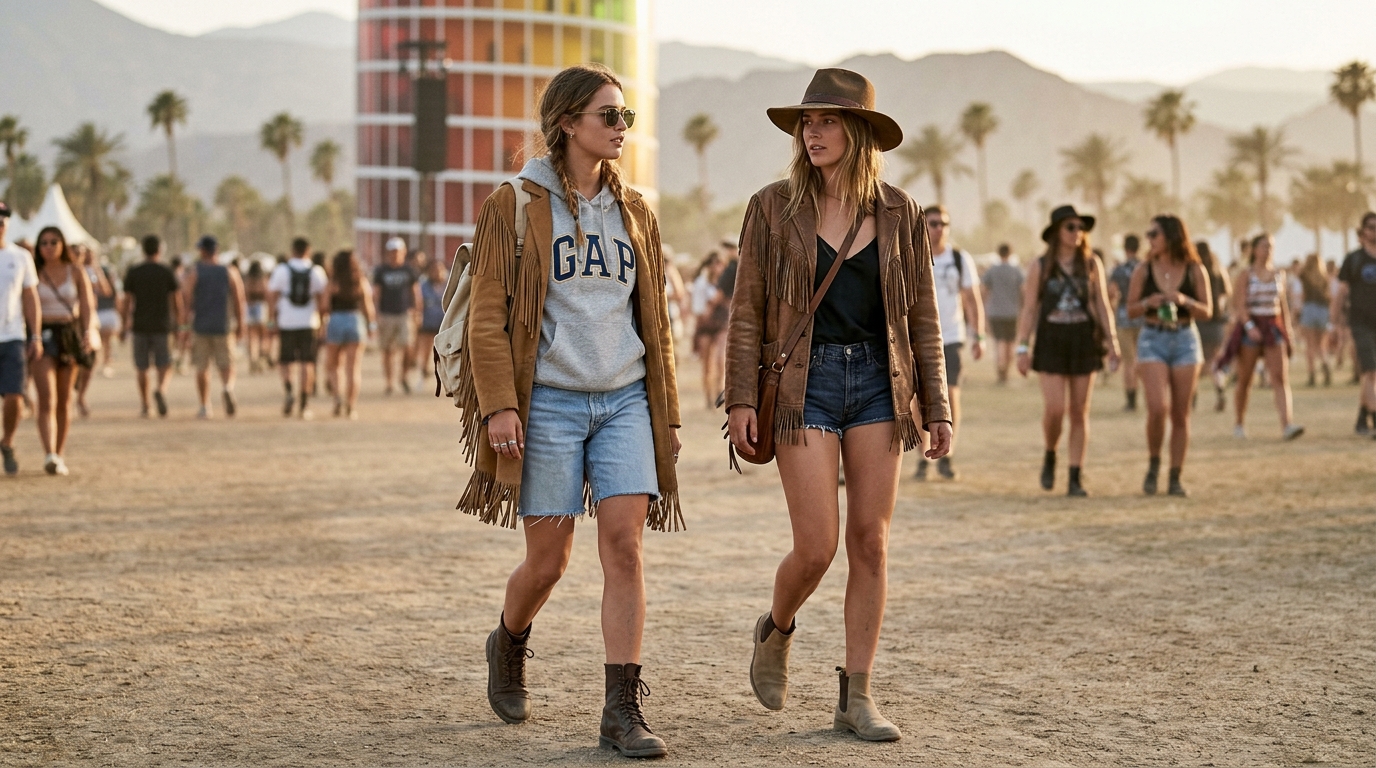
The hundred-dollar custom Gap hoodie is a brilliant market play. It answers the practical need for nighttime warmth with an exclusive collectible.
We are also observing the evolution of desert Western aesthetics. Fringe and worn-in leather are no longer costumes. They are functional layers built to survive the elements. Relaxed denim and micro-shorts paired with sturdy footwear prove that survival in a dust storm can still look impeccable.
The 2016 nostalgia loop has thankfully been refined and modernized.
Coachella style is no longer about throwing on every accessory in the jewelry box. It is a highly curated moment. The pendulum has swung from fast-fashion excess to intentional investments that blend Copenhagen minimalism with bohemian sleaze.
The influence of social media styling cannot be ignored. Stylist Stephanee Santamaría points out that earlier iterations of desert dressing relied heavily on predictable formulas. Today the visual language is entirely nuanced. Stripping back the excess is the new avant-garde. Clean lines and strong silhouettes are replacing the chaotic layering of the past. It represents a mature sartorial shift.
Dressing for the desert is an architectural challenge of climate and comfort.
The extreme conditions force attendees to prioritize garments that transition seamlessly. The heat of the afternoon requires breathable natural fibers. The sharp temperature drop at night demands heavy suede or thick cotton. It is a true test of wardrobe engineering.

Corporate presence at the festival has also undergone a massive transformation. The era of generic photo walls is dead. Consumers demand tangible value from brand activations. Gap provides shade, lounge seating, and a customized retail experience that feels organic to the environment. The apparel becomes a blank canvas for personal expression. Attendees can add daily charms and bead sets to their garments on the grounds.
Stagecoach follows immediately after and continues to drive the Western retail narrative for the season.
Brands like American Eagle and Boot Barn capitalize on this highly specific demographic. The Western aesthetic has blurred the lines between the two consecutive weekends. We see festivalgoers mixing traditional cowboy boots with metallic shorts. It is an impressive hybridization of two distinct subcultures sharing the exact same geography.
The outfit is no longer just clothing. It is the entire plan.
Ultimately, this season proves that festival fashion is an evolving organism. It demands functionality while indulging in high glamour. The desert remains a testing ground for the retail trends of tomorrow.
Frequently Asked Questions
What are the main Coachella 2026 fashion trends?
The leading trends for this year include futuristic boho, desert Western, and showgirl glamour. Attendees are mixing sheer layers with heavy suede and incorporating high-shine metallics with casual staples. Crochet also remains a functional and highly popular textile for the desert heat.
How is the Western aesthetic incorporated into Coachella outfits?
The desert Western trend focuses on grounding delicate pieces with rugged utility. Stylists recommend pairing a suede or lightweight leather jacket and broken-in boots with relaxed denim or micro shorts. It is about functionality that can withstand the dusty environment without looking like a costume.
What brand is the official apparel sponsor for Coachella 2026?
Gap is the exclusive apparel sponsor and official merch partner for the event. They launched a "Hoodie House" activation where attendees can purchase a limited-edition hoodie for $100. The garments can be personalized on-site with patches and collectible charms.
Why is crochet popular for summer festival fashion?
Crochet provides a breathable, open-weave structure that is ideal for high temperatures. It also taps into a nostalgic, vintage aesthetic that aligns with bohemian festival culture. It is typically layered over basic tanks or maxi skirts to create a multidimensional look.
How has Coachella style changed since 2016?
The uniform flower crowns and predictable boho silhouettes of 2016 have been replaced by highly individualized styling. Fashion at the festival is now more nuanced, focusing on clean lines, vintage sourcing, and unexpected texture combinations. The emphasis is on personal expression rather than adhering to a strict dress code.