The Grand Palais has seen many architectural transformations. But Matthieu Blazy’s couture debut for Chanel felt remarkably quiet. Inside a surreal landscape of giant, pale pink mushrooms, the air was thick with expectation. The collection was not a loud reclamation of the house’s codes. It was a gentle unraveling of them. Stephanie Cavalli stepped out first, signaling a shift in the brand’s internal clock.
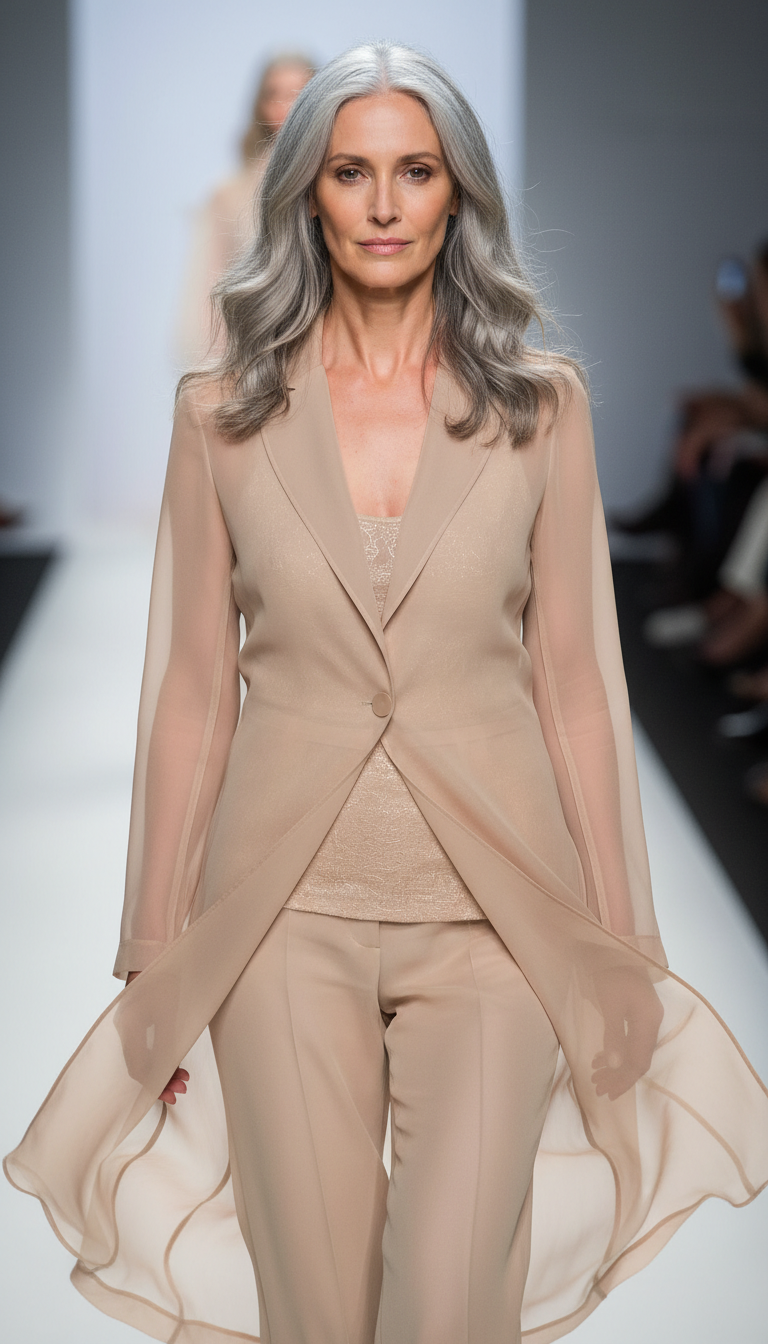
Cavalli is a forty-something model and vintage shop owner from upstate New York. She represents a departure from the typical runway ingenue.
Her opening look was a nude chiffon interpretation of the iconic tweed suit. Blazy stripped away the heavy wools in favor of transparent mousseline layers. The construction was barely held together by fine gold chains and seed pearls. It moved like a light breeze. This was not the rigid couture of the past. It was a study in weightlessness and the freedom of the female form. The audience watched a woman who looked like she actually had somewhere to be.
She walked with the grace of someone who has seen the world.
Much has been made of Cavalli’s hair. It is gray, natural, and entirely unbothered. She stopped dyeing it during the pandemic to prioritize her hair health. Now, it has become a signature of her burgeoning runway career. This was her second time walking for the house. Her first was the New York-themed Métiers d’Art show. Blazy chose her to open after being inspired by her during a fitting.
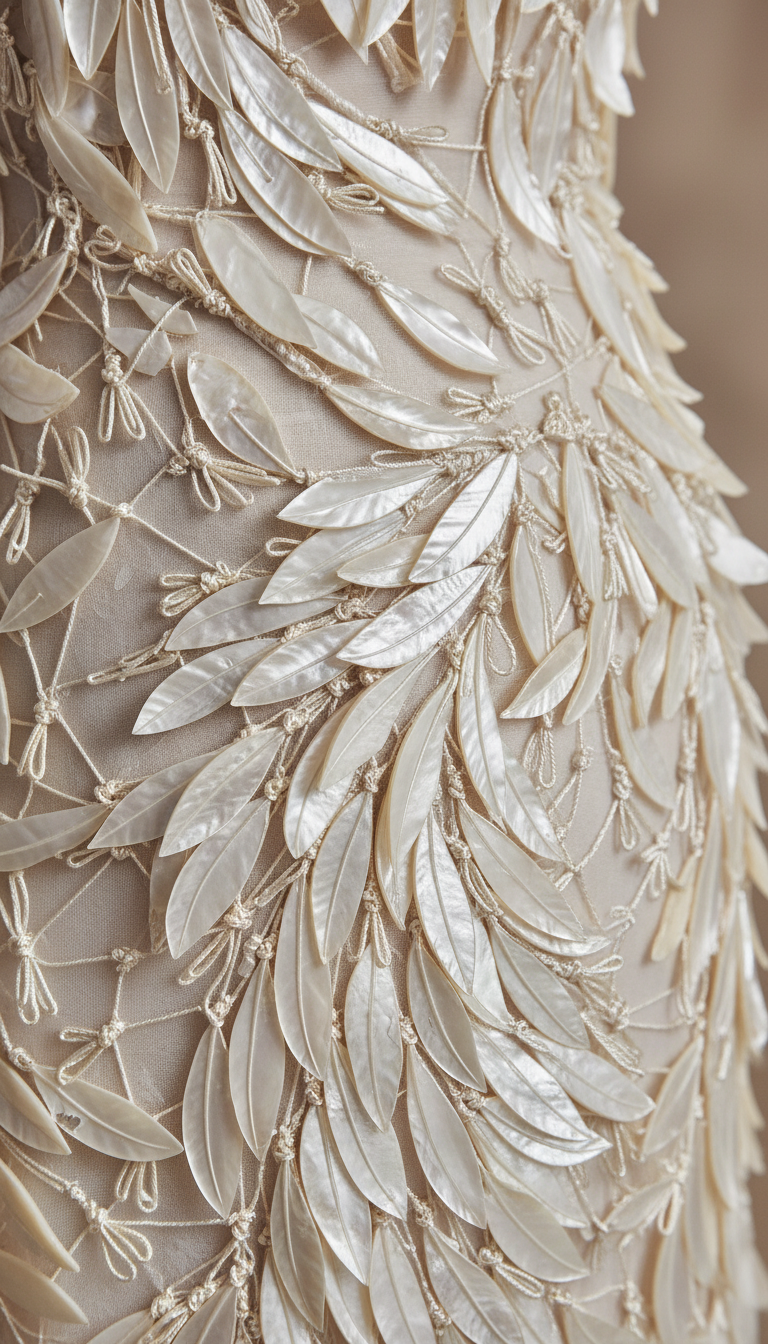
The collection followed a theme of avian lightness. Blazy cited birds as his primary inspiration. This manifested in mother-of-pearl feathers and 3-D faux tweed made of tiny silk knots. Even the embroidery suggested the texture of plumage. One particular flapper-style dress utilized raw threads to create the illusion of peacock feathers. It was a technical marvel that looked effortless. The designer is clearly interested in making the complex appear simple.
There were also moments of calculated subversion.
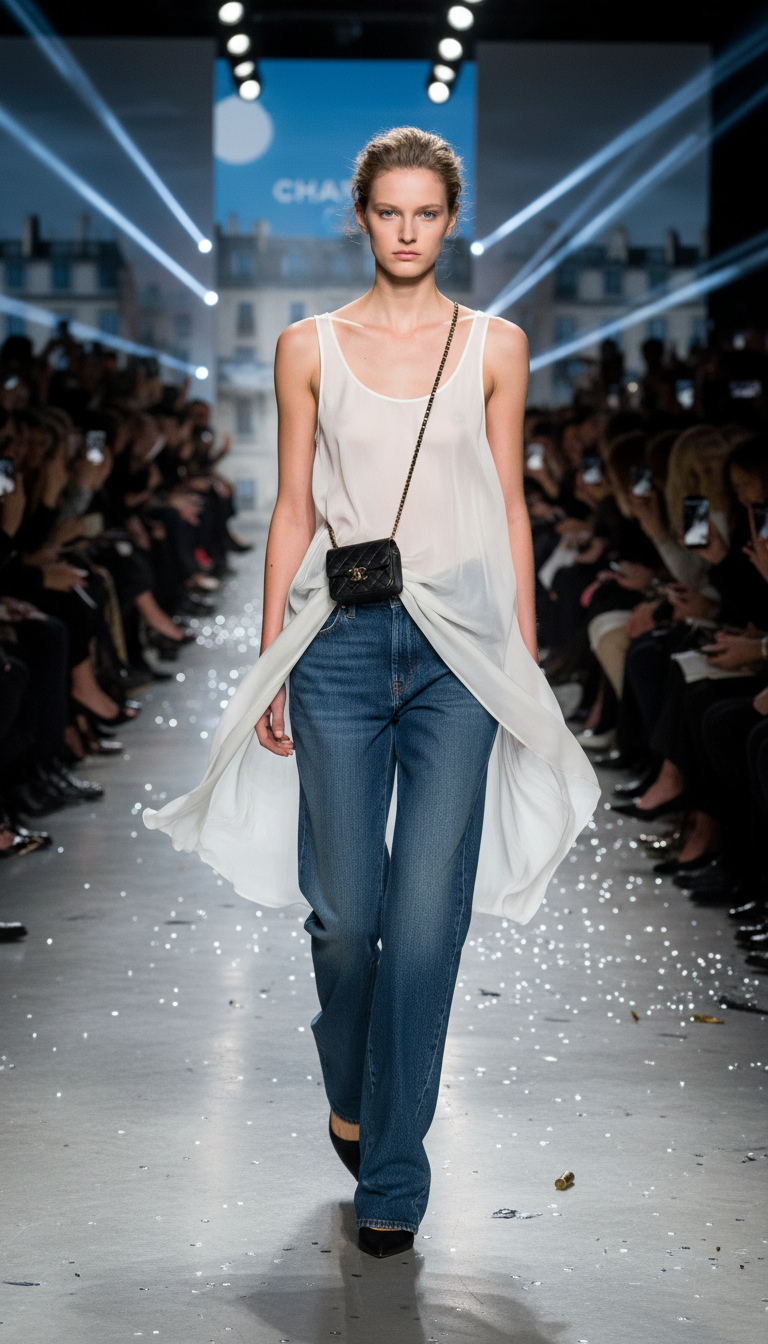
Blazy revisited a silhouette he made famous at Bottega Veneta. He sent a model down the runway in a white tank top and blue jeans. However, this was couture. The ensemble was rendered entirely in diaphanous silk mousseline. The jeans featured hand-stitched pockets and a grainy texture to emulate denim weave. It was a clever nod to casual luxury. It suggested that even the most mundane garments deserve the touch of an atelier.
The set design contrasted with the airy clothes. Giant toadstools rose from the floor. It felt like a fairy tale grounded in reality. Blazy wanted to dial down the drama. He sought something poetic and easily understood. He succeeded by removing the baggage of the Karl Lagerfeld era. Gone were the heavy camellias and the constant repetition of double Cs. He returned to the essence of Gabrielle Chanel.
He also introduced a deeply personal element to the clothes. Models were asked to provide a memory or a secret message. These were stitched into the linings of the garments. A child’s birth date or a quote from a love letter hidden within the silk. It was a reminder that couture is ultimately for the wearer. It is a private conversation between the artisan and the woman. This human touch felt revolutionary in an industry often obsessed with digital spectacle.
The casting continued this narrative of individuality and joy.
Bhavitha Mandava closed the show in a non-traditional wedding dress. It was an oversized tunic and skirt covered in glinting mother-of-pearl feathers. She circled the runway with a pirouette and a beam. Awar Odhiang and Alex Consani also appeared. They brought a sense of life that is often missing from high-fashion presentations. Blazy is building a Chanel that celebrates personality over perfection.
The market context for this collection is clear. It is a move toward wearable, relatable luxury. While the craftsmanship is eye-boggling, the silhouettes are pragmatic. The "raven" black dresses and drop-waist suits are designed for motion. They are for women who work and travel. Blazy is betting that the modern couture client wants to recognize herself in the mirror.
The finale soundtrack featured a mash-up of Nineties Britpop. Brand ambassadors Dua Lipa and A$AP Rocky sang along from the front row. It was a moment of pure dopamine. The show felt like a breath of fresh air in a crowded week. Blazy has proven that he can handle the weight of a historic house. He does so by making it feel as light as a feather.
Frequently Asked Questions
Who opened the Chanel Spring 2026 Couture show?
Stephanie Cavalli, a forty-something model and vintage store owner, opened the show. She was personally selected by Matthieu Blazy after he was inspired by her during a fitting.
What was the inspiration behind Matthieu Blazy’s first Chanel couture collection?
The collection was inspired by birds and the idea of "women in motion." Blazy focused on themes of lightness, freedom, and shedding the traditional weight of brand iconography.
Why did model Stephanie Cavalli decide to stop coloring her hair?
She chose to stop dyeing her hair during the pandemic to improve its health. She wanted to stop her self-esteem from being dependent on hair dye, and the natural gray hair eventually helped her modeling career.
What was unique about the set design for the Chanel Spring 2026 Couture show?
The show took place at the Grand Palais inside a pale pink forest. The runway was decorated with giant, Wonderland-sized magic mushrooms and toadstools to create a poetic atmosphere.
How did Matthieu Blazy reinterpret the classic Chanel suit for this collection?
He replaced traditional heavy bouclé with layers of transparent silk mousseline. The jackets were held in place by fine gold chains and seed pearls sewn into the hems for a weightless effect.
What personal touch did the designer add to the couture garments?
Blazy invited models to choose personal symbols, initials, or messages to be stitched inside their garments. This included things like a child's birth date or quotes from love letters.
Was there a denim look in the Chanel couture show?
Yes, Blazy included a white tank top and blue jeans look. However, the pieces were actually made of diaphanous silk mousseline and featured hand-stitched details to mimic the appearance of denim.
Who wore the wedding dress at the end of the show?
Bhavitha Mandava, who previously opened the Métiers d’Art show in New York, wore the finale wedding look. It consisted of an oversized tunic and skirt embellished with mother-of-pearl feathers.