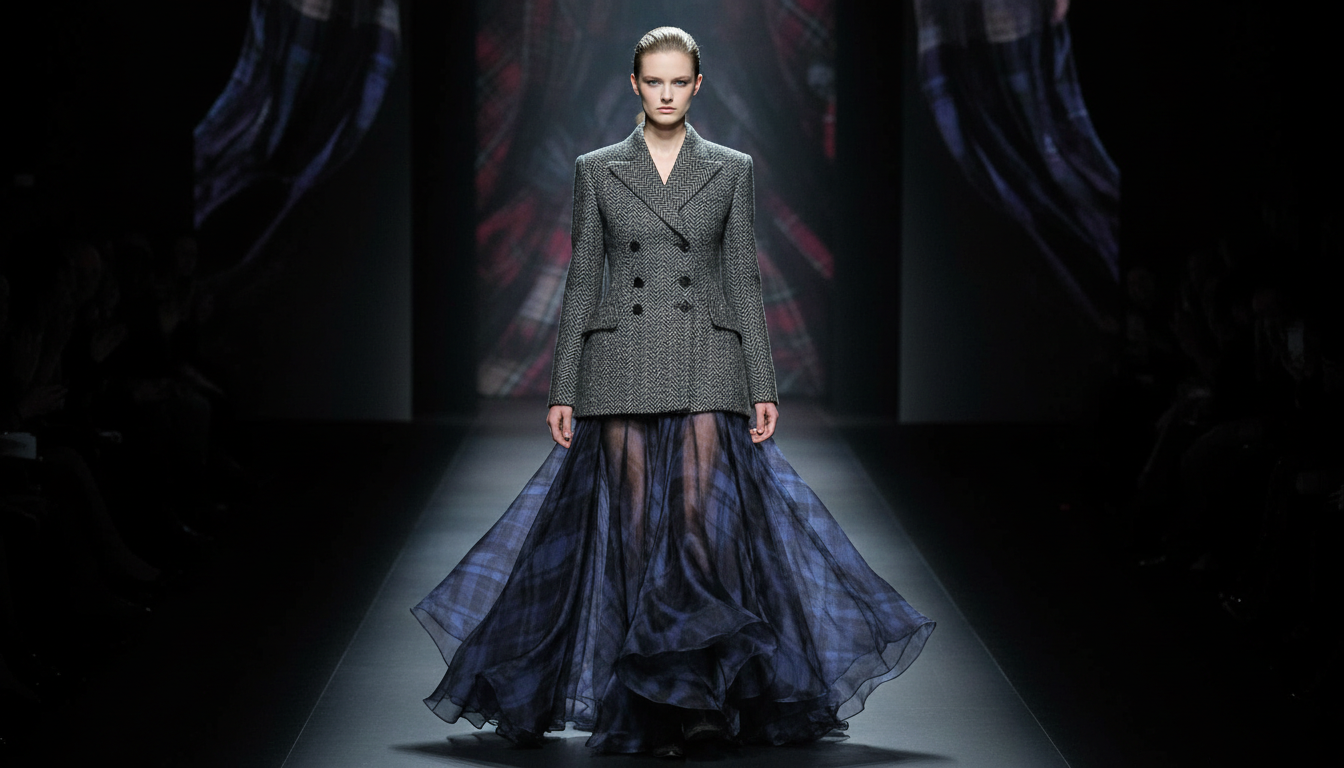
It was the seventh day of Paris Fashion Week. The atmosphere at the Alexander McQueen Fall/Winter 2026 show was thick with more than just the usual industry anticipation. Seán McGirr presented a collection that functioned less like a traditional runway and more like a study in modern anxiety. The front row featured a curated mix of the new guard, including Chappell Roan and Tokischa, who watched as McGirr delivered his fifth collection for the house.
This was a sharpened vision.
McGirr cited Todd Haynes’ 1995 film Safe as a primary catalyst for this season. In the film, Julianne Moore’s character retreats into a sterile, paranoid existence as she suffers from an inexplicable environmental illness. This translated into clothes that oscillated between protection and exposure. The designer explored the psychological tension between how we perform for the world and the paranoia that exists beneath the surface. It was a sharp, intellectual pivot for the house.
The clothes were an exercise in interiority.
The tailoring remained the anchor. A herringbone jacket opened the show with such precision that it doubled as a dress. McGirr looked back at the 2006 Widows of Culloden collection to find this specific sense of controlled emotion. The silhouettes were strict but dissolved into soft waves at the thigh. It felt like a deliberate nod to the McQueen archive without being a literal carbon copy.
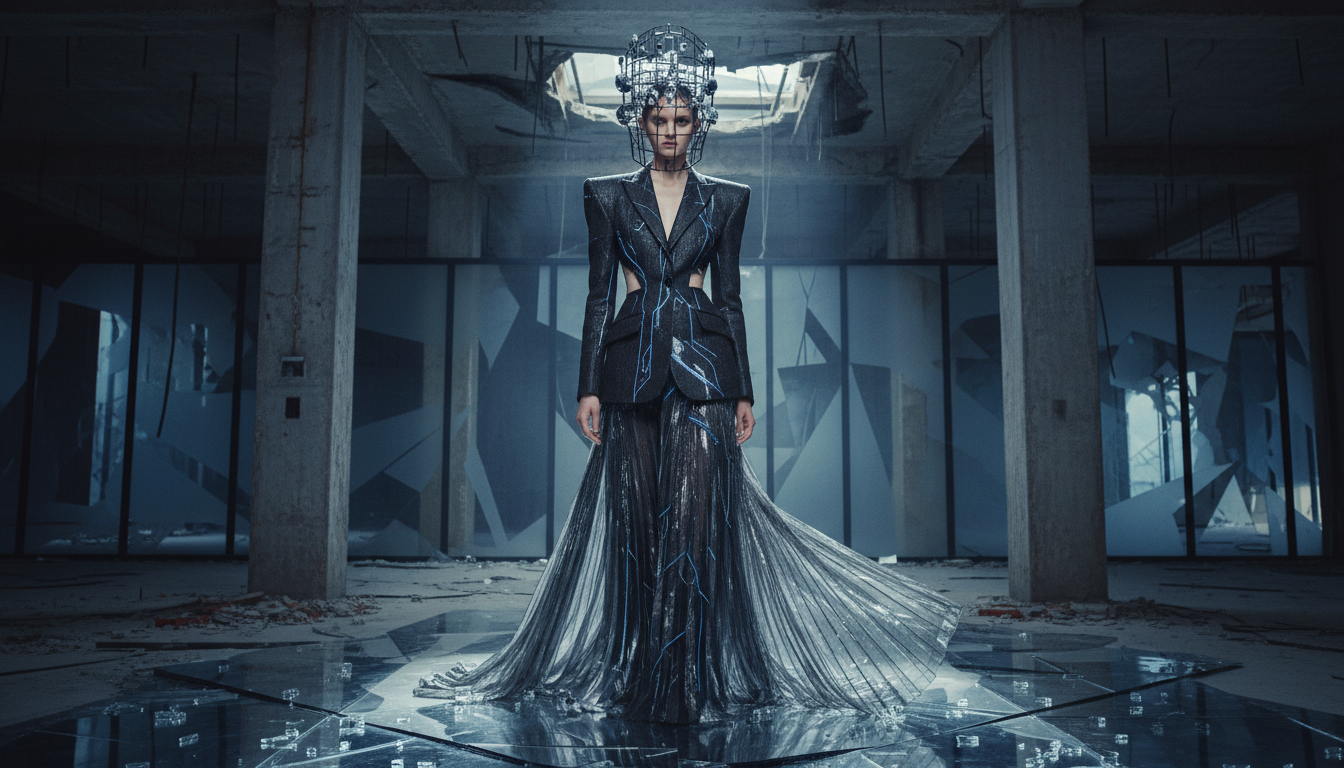
The "bumster" made a quiet, sophisticated return. Rather than the overt shock of the nineties, these trousers featured a low-dipped waist at the back. They formed a heart-shaped frame around the base of the spine. Lee McQueen famously called this the most erotic part of the body. McGirr’s version felt contemporary. It was a subtle reclamation of house codes for a younger, Gen Z audience that demands both history and wearability.
Materials told a story of domesticity turned strange.
Lace gowns, typically reserved for the bedroom, were reimagined as dramatic eveningwear. They were styled with spherical bags that looked like polished ornaments. Multi-buttoned velvet blazers were reworked into sculptural mini dresses. Three-dimensional floral wallpapers morphed into textured tops that peeked through glossy satin ensembles. It was a clever play on the idea of the home as a site of both comfort and entrapment.
There was a hardness to the softness.
Heavy chainmail was softened into poplin shirts and cable-knit jumpers. This transition of metal to fabric spoke to the collection's theme of external armor versus internal fragility. House signatures, including the skull-print scarves and the iconic knuckle clutch, returned with updated finishes. The scarves appeared in shades of lavender and cargo green, appearing less gothic and more like essential city gear.

Mary Quant’s influence was palpable in the pert miniskirts and knee-high boots. McGirr infused these with a 2026 edge by adding oversized cargo pockets and slinging them low on the hips. It gave the collection a "London girl" energy. He spoke backstage about the girls in the West End and Camden. It was about clothes that looked like the wearer had dressed themselves rather than being styled by a committee.
The eveningwear felt more experimental.
Sheer fabrics and lace gowns were styled with spherical bags. Some pieces were hand-crocheted from small rings and lurex yarn. This specific technique was a collective effort from the remaining design team. Given the recent layoffs and turnover struggles at the house, this piece felt like a symbol of resilience. It was a new interpretation of chainmail that relied on human touch rather than industrial coldness.
The show closed with a theatrical bridal moment.
An exaggerated headpiece was paired with a high-low gown adorned with blooming florals. It was the kind of McQueen drama that reaffirms the brand's lasting fire. Despite the financial headwinds and the 60% decline in turnover over the past three years, the creative flame remains bright. McGirr is finding his rhythm by balancing archival reverence with a very modern sense of urgency.
The market context cannot be ignored.
The brand saw a 20% reduction in staff in late 2025. This pressure often forces a designer to play it safe, but McGirr did the opposite. He leaned into the fatalistic glamour that has always been the McQueen DNA. By targeting the Gen Z demographic through sharp tailoring and accessible silhouettes, he is attempting to bridge the gap between the house's storied past and a commercially viable future.
Frequently Asked Questions
What was the main inspiration for the McQueen FW26 collection?
Seán McGirr was primarily inspired by Todd Haynes’ 1995 film Safe. The collection explored themes of paranoia, perfectionism, and the tension between one's internal state and external performance.
How did the collection reference the original Alexander McQueen archives?
The show featured several archival nods, including silhouettes from the 2006 Widows of Culloden collection and a modern take on the "bumster" trouser. McGirr also used tailoring techniques seen in the 1996 Dante and 1997 La Poupée shows.
Which celebrities were in the front row at the McQueen FW26 show?
The front row was filled with notable figures including Chappell Roan, Tokischa, The Last Dinner Party, Myha’la, and Sophie Thatcher. This reflected the brand's strategy to appeal to a younger, Gen Z audience.
What were the standout materials used in the Fall/Winter 2026 collection?
Key materials included herringbone wool, velvet, glossy satin, and hand-crocheted lurex rings. Notably, the collection used hand-embroidered silk feathers instead of real bird feathers, reflecting modern ethical standards.
How has the brand's recent financial situation affected the collections?
Alexander McQueen has faced a 60% decline in turnover over three years and significant staff layoffs in late 2025. This pressure was reflected in a collection that balanced high-concept "performance art" with more wearable, commercially-minded pieces like miniskirts and boots.
Who is the current creative director of Alexander McQueen?
Seán McGirr is the current creative director. The Fall/Winter 2026 collection was his fifth for the fashion house since he took over the role in 2023.