
The dairy aisle has long mastered the art of nutritional camouflage. When a dietitian shares 7 yogurts with more added sugar than vanilla ice cream, the public takes notice of the deception. A recent 2026 survey conducted by Action on Salt & Sugar at Queen Mary University of London shatters this wholesome illusion. Researchers analyzed 104 children’s yogurts across the UK.
These findings reveal a disturbing reality. Morning staples now easily rival the sugar density of a traditional frozen dessert.
Dr. Kawther Hashem leads the charge in exposing these systemic formulation flaws. Her research team discovered that the Nestlé Smarties Vanilla Split Pot absolutely dominates the high-sugar category. This specific product delivers a staggering 14.1 grams of sugar per 100 grams. That equates to 15.1 grams in a single suggested serving. Parents are essentially serving their children nearly four teaspoons of sugar for breakfast.
The simple arithmetic exposes a totally broken food industry system.
Corporate averages paint an equally grim picture. Nestlé products maintain an average of 10.7 grams of total sugar per 100 grams. Lidl follows at 9.4 grams. Aldi hovers closely behind with a 9.0 gram average.

Not every manufacturer fails this fundamental health metric. The UK National Health Service defines a low-sugar food as containing five grams or less per 100 grams. The Collective Great Dairy Natural plus Vitamin D successfully hits this target. Yoplait Petits Filous No Added Sugar Strawberry and Banana also achieves an impressive 4.7 grams. Formulation integrity is possible.
The industry average currently sits at 8.2 grams. Sainsbury’s products managed a respectable 6.2 grams across their line.
Progress remains undeniably sluggish across the broader dairy sector. The UK government introduced a highly publicized voluntary Sugar Reduction Programme in 2016. The initiative confidently targeted a 20 percent reduction by 2020. Yogurts only managed a 13.5 percent decrease during that critical five-year window. Relying heavily on voluntary corporate action simply allows major brands to bypass meaningful health benchmarks entirely.
Aggressive marketing strategies heavily compound the dietary damage.
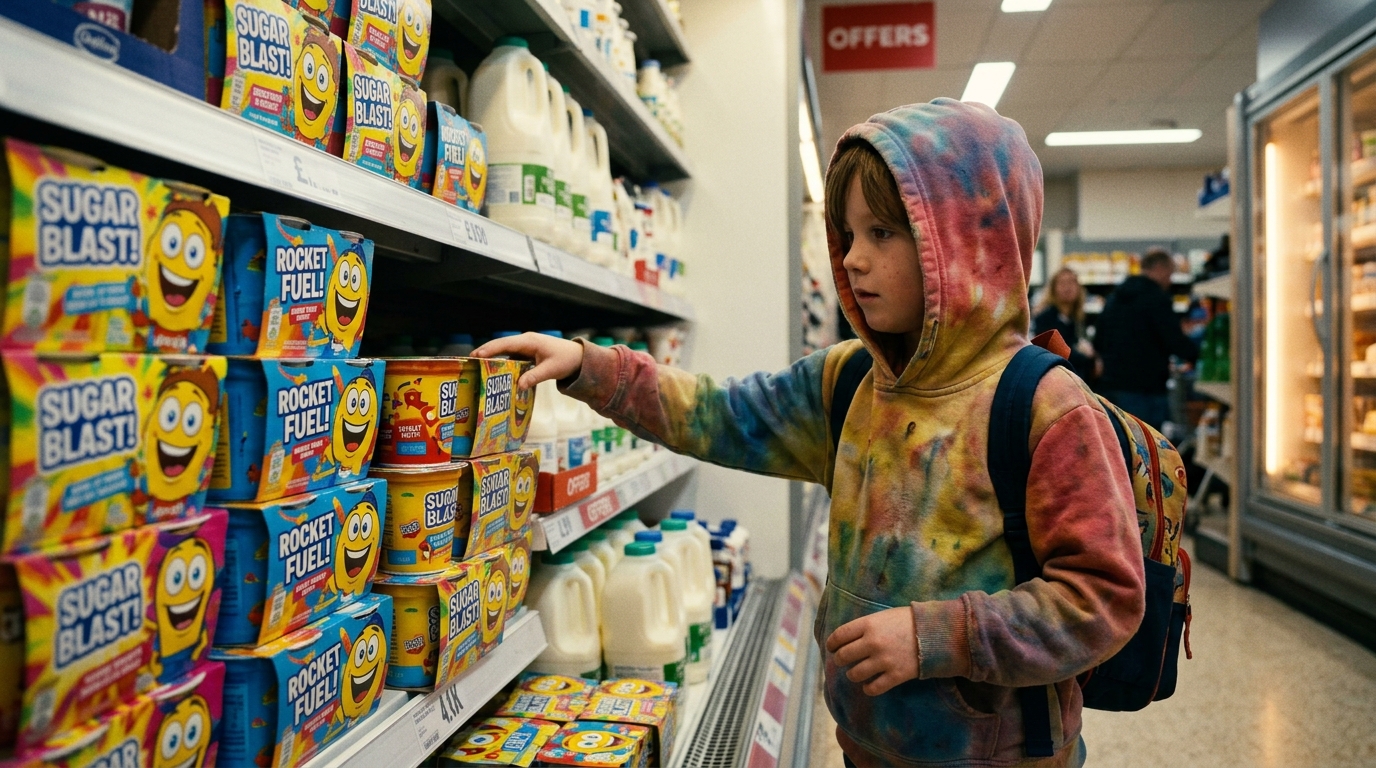
Bright packaging and familiar cartoon characters aggressively target young consumers. While advertising restrictions exist for some junk foods, child-appealing packaging remains unregulated for high-sugar dairy goods.
Kate Howard coordinates the Children’s Food Campaign at Sustain. She notes that food companies demonstrate remarkable innovation when commercial incentives align. She demands that this corporate energy be redirected toward affordable health. The Recipe for Change campaign backs this sentiment completely. Their polling shows 79 percent of UK adults demand strict government action.
A Citizens’ Charter will arrive at Downing Street this autumn. The public expects members of parliament to enforce strict rules.
Sixty percent of Britons now find eating well exceptionally difficult on a daily basis. Nearly half of the population believes maintaining a balanced diet is harder today than it was two decades ago. The subtle transition from wholesome dairy to dessert in disguise requires immediate regulatory correction. Health experts firmly refuse to accept the current standard. The dairy aisle must undergo a rigorous nutritional transformation.
Accountability can no longer remain an optional corporate exercise.
Consumers deserve transparent reporting and meaningful enforcement. The Citizens' Charter represents a crucial step toward dismantling the deceptive marketing tactics that have defined the modern grocery experience for far too long.
Frequently Asked Questions
What is considered a low-sugar yogurt?
According to the UK National Health Service, a food qualifies as low in sugar when it contains five grams or less per 100 grams. Yogurts exceeding this limit typically contain added free sugars which provide no nutritional benefit.
Why does plain yogurt still show sugar on the nutrition label?
Dairy products naturally contain a milk sugar called lactose. The recent survey estimates that approximately 3.8 grams per 100 grams of total sugars in yogurt occur naturally from milk rather than from artificial additives.
Are voluntary sugar reduction programs effective?
The data suggests they are largely insufficient. The UK government aimed for a 20 percent reduction by 2020, but the yogurt sector only achieved a 13.5 percent decrease through voluntary corporate measures.
Which yogurt brands have the highest sugar content?
The recent Action on Salt & Sugar survey identified Nestlé products as having the highest average sugar content at 10.7 grams per 100 grams. Lidl and Aldi followed closely behind in the national data.
How are high-sugar yogurts marketed to children?
Many brands utilize bright colors, familiar cartoons, and playful characters to attract young consumers. Advocacy groups are actively lobbying to reserve child-appealing packaging exclusively for healthier nutritional options.