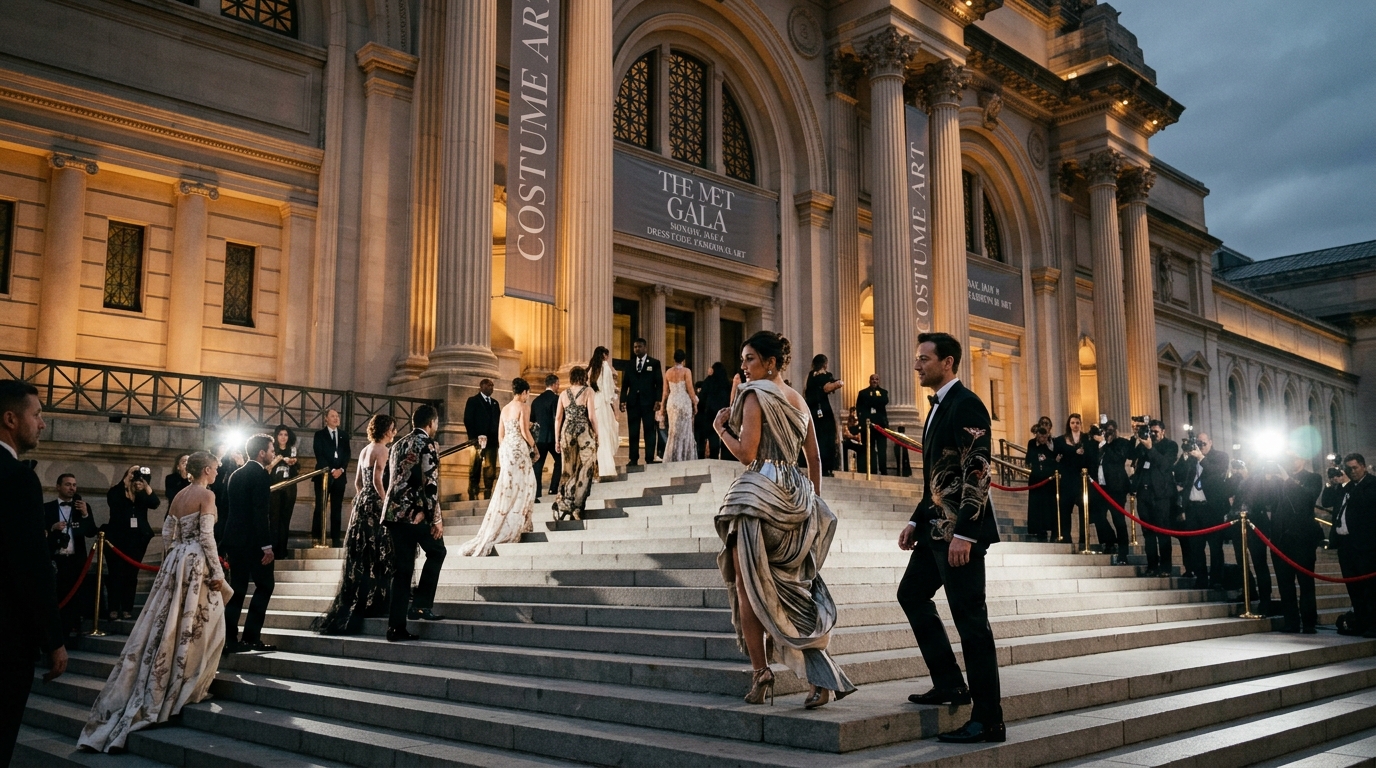
The 2026 Met Gala arrives on Monday, May 4, carrying the heavy weight of both aesthetic ambition and economic friction. Guiding the evening is the dress code, "Fashion is Art," a directive deeply tied to the Metropolitan Museum of Art's forthcoming "Costume Art" spring exhibition. Approximately 400 exclusive guests will ascend the legendary steps under an intense global spotlight.
This year marks a financial milestone. Individual tickets now cost a staggering $100,000, while a table of ten starts at $350,000.
Curator Andrew Bolton has engineered an intellectual dialogue between the dressed body and historical fine art. The exhibit examines how clothing relates to the human form across 5,000 years of visual culture. Garments are placed directly alongside classical sculptures and anatomical studies. Artist Samar Hejazi brings a surreal edge to the curation by designing mirrored faces for the mannequins to reflect the viewer's own lived reality.
True craftsmanship takes absolute precedence over mere spectacle.
The market context surrounding this exorbitant pricing is impossible to ignore. In 2025, the Costume Institute raised $31 million. This astronomical figure reflects a highly guarded ecosystem of luxury brand sponsorships and corporate money.
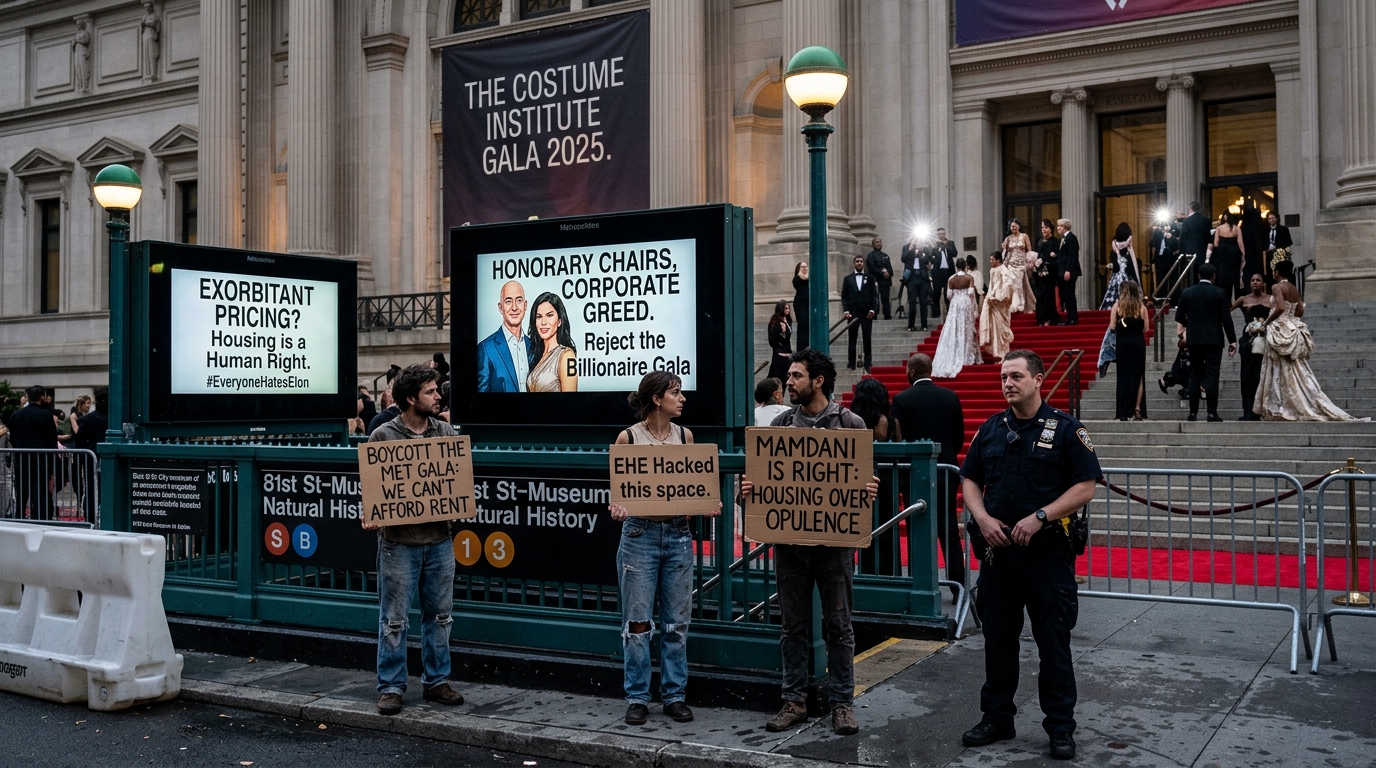
The undeniable tension of the evening stems from its high-profile underwriting. Amazon founder Jeff Bezos and his wife Lauren Sánchez Bezos serve as honorary chairs. Their involvement has sparked intense political pushback across the city. The activist collective Everyone Hates Elon recently hacked New York subway display cases to broadcast anti-billionaire messages targeting the exclusive event.
Boycotts have officially permeated the political sphere. New York City Mayor Zohran Mamdani and his wife Rama Duwaji are officially skipping the gala.
Breaking a tradition that spanned the tenures of Eric Adams, Bill de Blasio, and Mike Bloomberg, Mamdani cited housing affordability as his core priority. The democratic socialist mayor refused to participate in the opulent gathering. The optics of extreme wealth inequality have simply become too glaring for City Hall to ignore.
The official event co-chairs remain firmly rooted in star power.
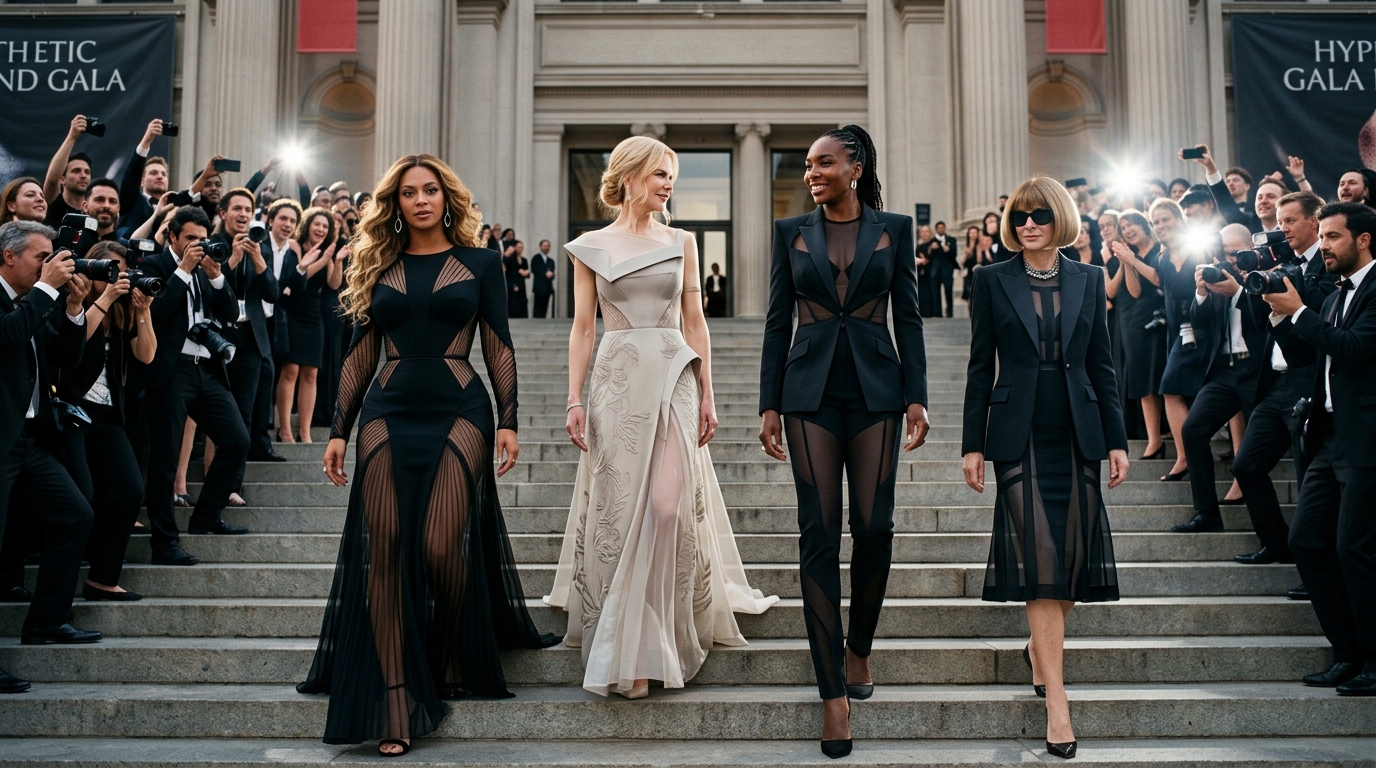
Beyoncé returns to the museum steps alongside Nicole Kidman, Venus Williams, and Vogue editor Anna Wintour. This formidable quartet guarantees a media frenzy capable of drowning out localized protests. Designers are expected to respond to the dress code with architectural silhouettes and sheer textiles. The focus will shift heavily toward precise tailoring and sculptural elements that honor the physical anatomy of the wearer.
True art requires a certain level of discipline. Celebrities who ignore the structural theme will likely face heavy criticism.
The Gala dates back to 1948 as a midnight supper club. It evolved into a themed spectacle during the 1973 Balenciaga exhibit. Today, it operates as the ultimate arbiter of industry relevance. Access is strictly controlled by a centralized authority to maintain prestige.
Fashion houses often purchase entire tables to secure placement for their chosen muses. This practice effectively subsidizes the exorbitant entry fee for select talent. The entire operation functions as a high-stakes marketing matrix. The Costume Institute secures essential operational funding while global conglomerates generate billions of impressions across social platforms.
The line between a garment and a masterpiece is notoriously thin. Monday night will test that limit.
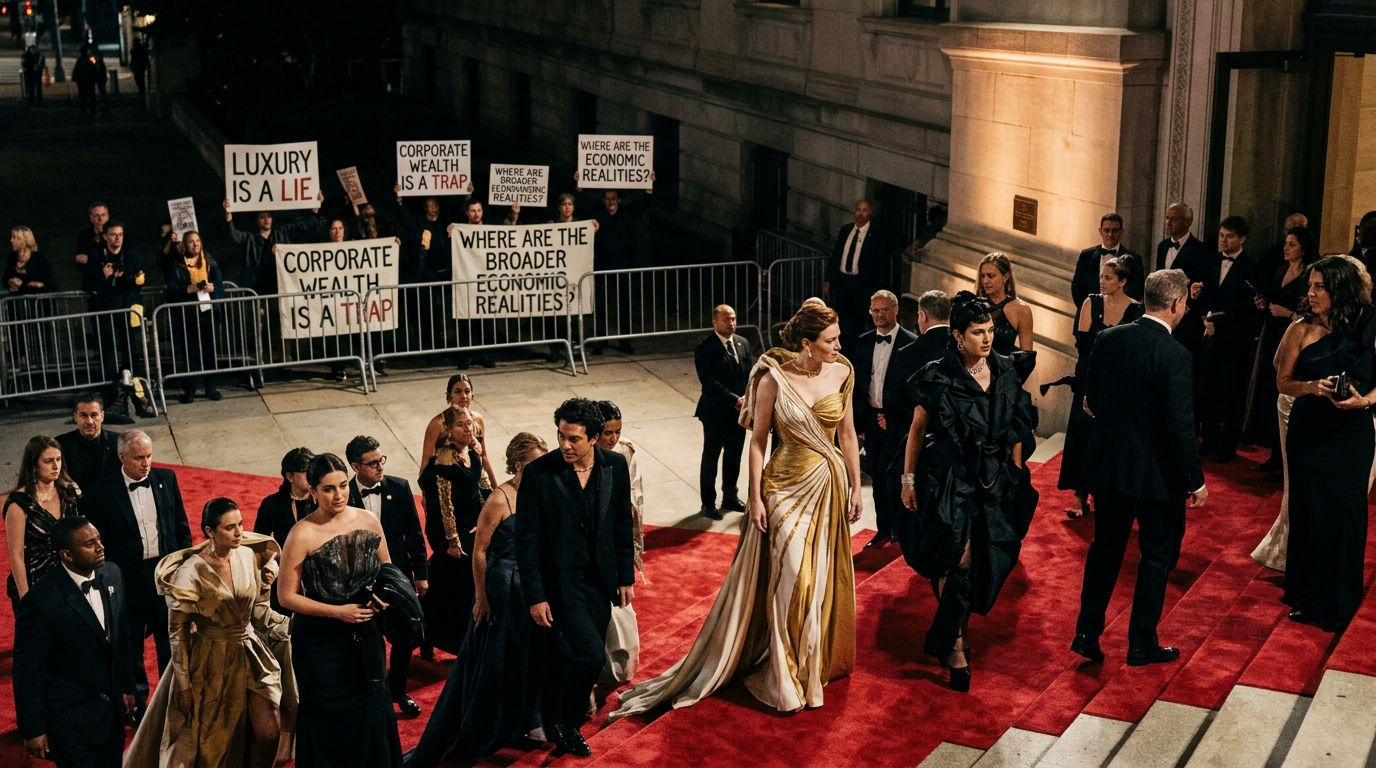
The intersection of corporate wealth, political protest, and unparalleled craftsmanship makes this year entirely unique. It is a harsh reminder that the upper echelons of the luxury sector operate completely isolated from any broader economic realities.
The definition of costume art will undoubtedly be stretched by attendees seeking viral moments over genuine artistry. Yet the underlying message curated by Bolton remains deeply academic. The intention is to force an acknowledgment of the physical body beneath the fabric. By tracing aesthetic evolution from classical antiquity to contemporary avant-garde, the exhibit demands a high level of visual literacy from its audience.
Red carpet interpretations will likely feature tight corsets and exposed boning.
The museum opens its doors to the general public on May 10. The exhibition will occupy the newly expanded gallery spaces and run through early next year. Those unable to secure an invitation to the gala will eventually have ample time to scrutinize the meticulous needlework up close.
Fashion is ultimately a direct reflection of our human anatomy.
The financial barriers and political controversies surrounding this gathering only enhance its mythology. Every stitch and seam presented on the red carpet carries the weight of a hundred thousand dollar entry fee. Whether the resulting ensembles qualify as high art or merely expensive marketing remains entirely subjective. The Costume Institute will undoubtedly benefit either way.
Frequently Asked Questions
How much does a ticket to the 2026 Met Gala cost?
An individual ticket for the 2026 event costs $100,000. A table of ten begins at $350,000. Tickets are strictly invitation-only and not available to the general public.
What is the theme for the 2026 Met Gala?
The dress code is "Fashion is Art." This directive is inspired by the Metropolitan Museum of Art's "Costume Art" spring exhibition, which focuses on the relationship between clothing and the human body across 5,000 years.
Who are the co-chairs for the 2026 Met Gala?
The official co-chairs are Beyoncé, Nicole Kidman, Venus Williams, and Vogue editor Anna Wintour. Jeff Bezos and Lauren Sánchez Bezos serve as honorary chairs.
Why is Mayor Zohran Mamdani skipping the 2026 Met Gala?
Mayor Mamdani and his wife Rama Duwaji are abstaining from the event to focus on New York City affordability. The decision aligns with his political stance against extreme wealth inequality and billionaire sponsorships.
When does the Costume Art exhibition open to the public?
The Costume Institute's exhibition opens on May 10, 2026. It will run through January 10, 2027, inside the newly expanded gallery spaces.
Who designed the mannequins for the Costume Art exhibit?
Artist Samar Hejazi designed mirrored faces for the exhibition mannequins. Curator Andrew Bolton commissioned these pieces to bridge the gap between the viewer and the displayed garments.